

By Kelvin Sin, Co-Founder of LiveFree · CEA Reg. No. R062804F · Last updated June 2026
If you are shopping for a home or an investment in District 19 (D19) right now, you face a clear fork in the road. Do you pay the developer premium for a brand-new launch and wait three-to-four years for keys? Or do you buy a resale unit at a lower price per square foot (psf) and move in next month?
There is no universally “correct” answer — but there is a right answer for your situation. This guide breaks down the real D19 numbers as of mid-2026: the psf gap, the trade-offs in cash flow, the case for capital appreciation, and a side-by-side comparison table so you can see the difference at a glance.
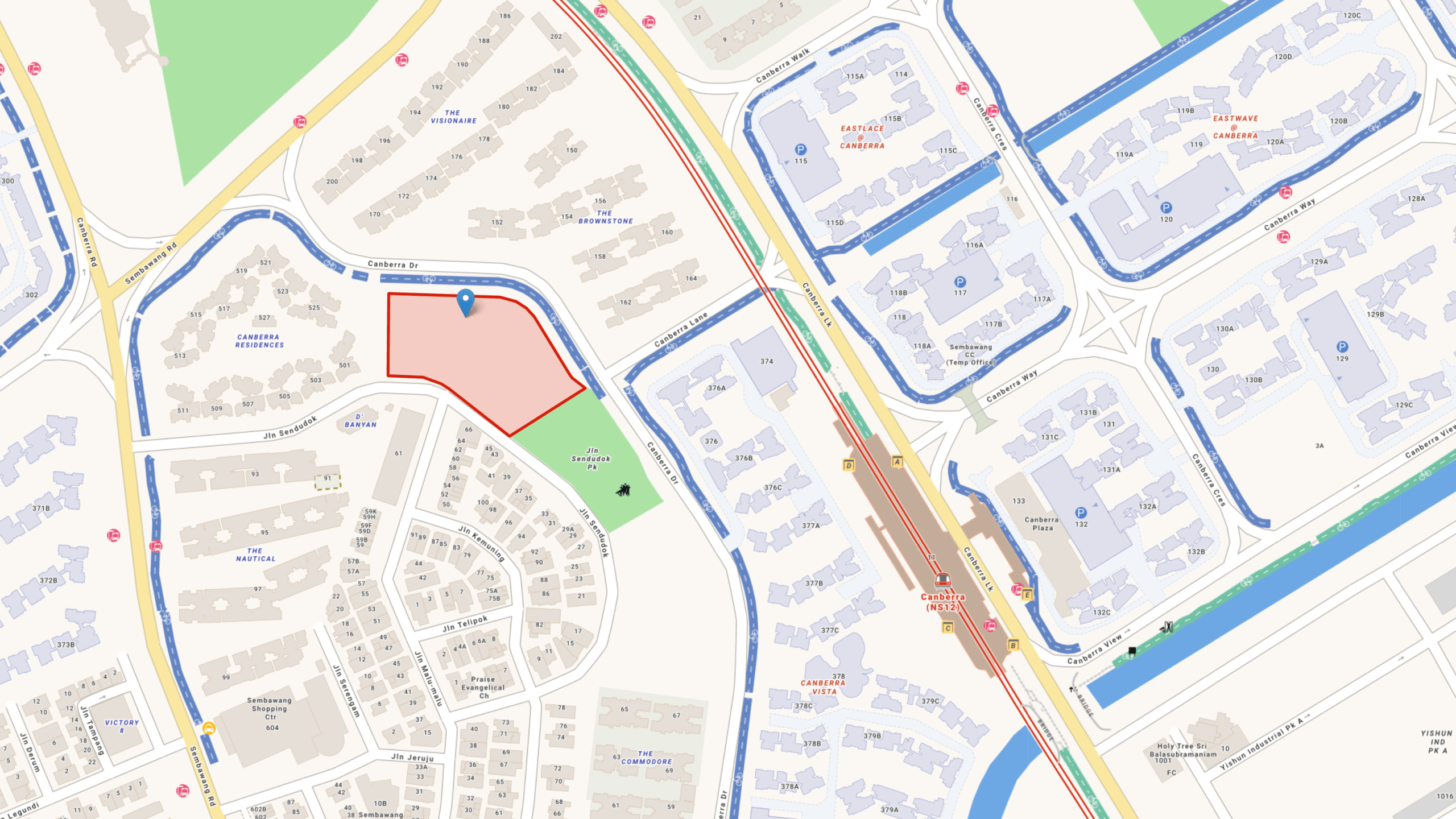
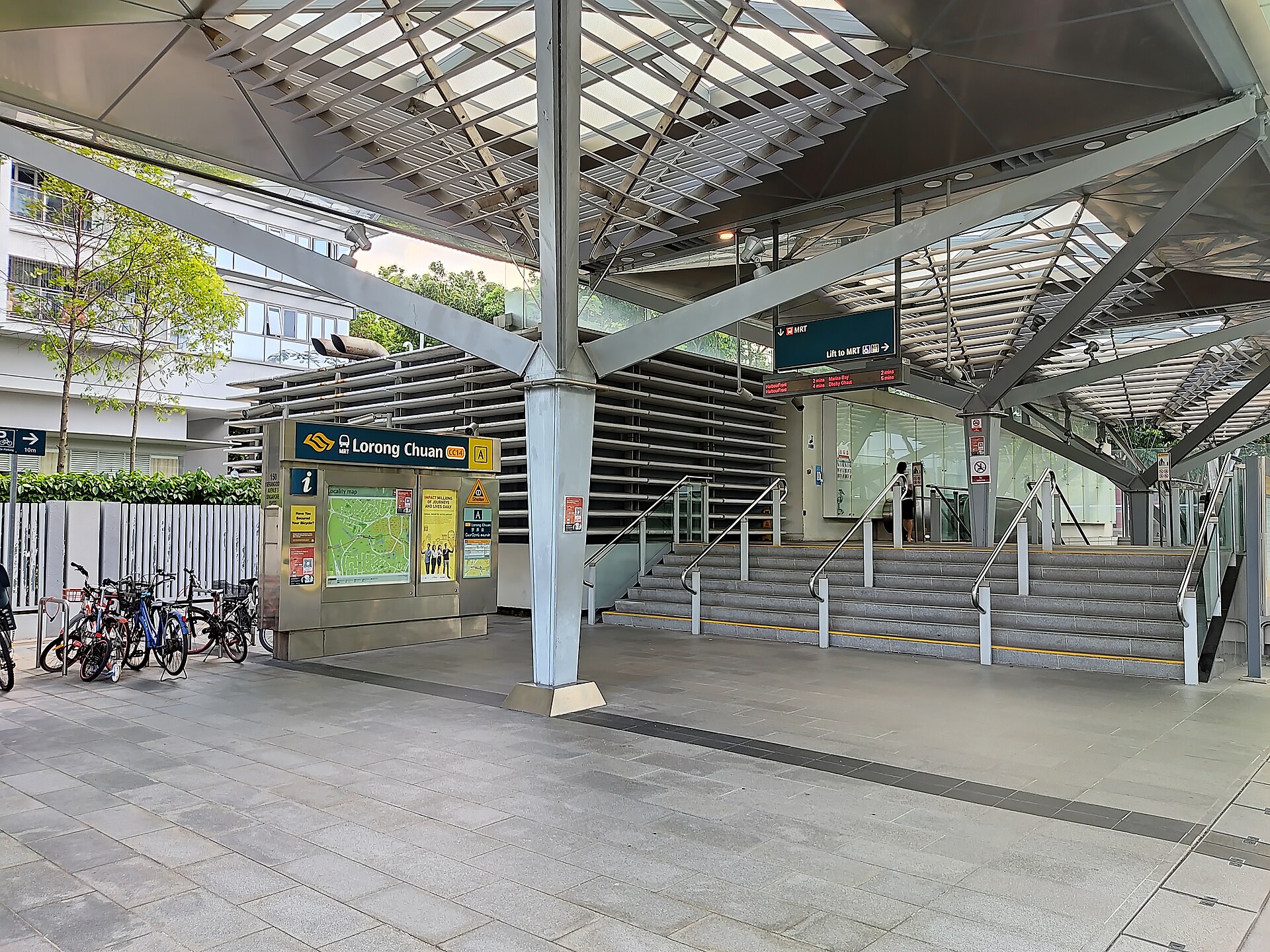
District 19 is one of Singapore’s larger residential districts in the northeast. It covers Serangoon, Hougang, Punggol, Sengkang, and the Lorong Chuan area, and is served by a mix of MRT lines — the Circle Line (Lorong Chuan, Serangoon, Bartley), the North East Line (Serangoon, Kovan, Hougang, Buangkok, Sengkang, Punggol), and the Cross Island Line, which is expanding connectivity across the district.
This matters because D19 is not one homogeneous market. A unit beside Lorong Chuan MRT in the mature Serangoon belt commands a very different price from a waterfront unit further out in Hougang. When we talk about “new launch vs resale” here, we are comparing within this district so the location premium is broadly held constant.
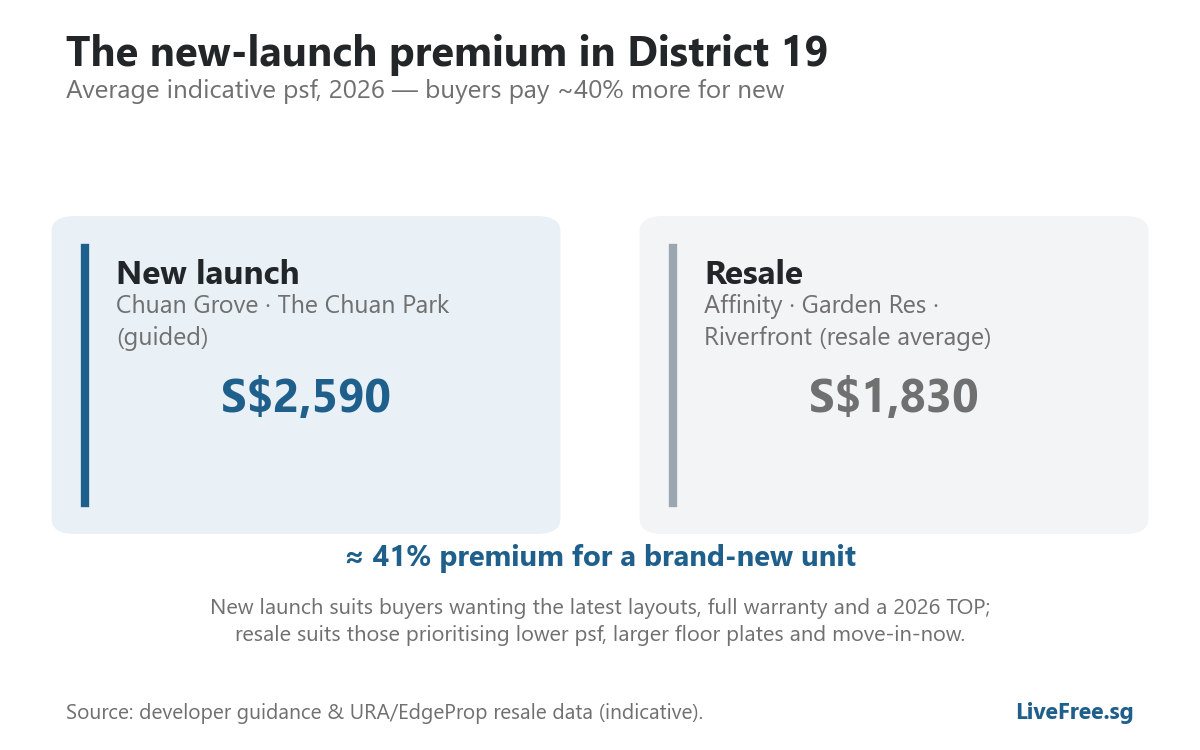
Across Singapore’s mass-market (OCR) districts, new launch condos generally trade at a meaningful premium to resale stock — frequently in the region of 10% to 20% higher psf, and in some districts the gap is wider still. D19 follows the same pattern.
Here is the lay of the land as of the first half of 2026:
In other words, the typical D19 new launch in 2026 is asking somewhere around S$700 to S$900 more per square foot than the average D19 resale unit. On a 900 sq ft three-bedder, that gap alone can translate into roughly S$630,000 to S$810,000 more in absolute price — a number large enough to change which loan, which life stage, and which buyer profile each option suits.
A caveat worth stating plainly: psf is not a like-for-like measure. New launches are smaller on average, fully fitted, and start their 99-year lease fresh, while many resale comparables are larger and several years into their lease. The psf gap therefore overstates the “true” quality-adjusted difference. But it is still the cleanest single number to anchor a decision.
The table below pulls together representative D19 projects across both camps. All figures are approximate, drawn from publicly reported transaction data and developer/research guidance as of early-to-mid 2026, and are rounded. Treat them as a directional benchmark, not a valuation.
| Project | Type | Tenure | Approx. psf (2026) | Notes / nearest MRT |
|---|---|---|---|---|
| Chuan Grove | New launch (expected 4Q2026) | 99-year LH | ~S$2,600 (guided) | Lorong Chuan (CC); ~1,055 units; Sing Holdings–Sunway JV |
| Chuan Park | New launch (2024, building) | 99-year LH | ~S$2,500–2,650 | Lorong Chuan (CC); 916 units; Kingsford–MCC |
| Affinity at Serangoon | Resale (TOP ~2023) | 99-year LH | ~S$1,800–1,850 | Serangoon North; ~1,052 units |
| The Garden Residences | Resale (TOP ~2021) | 99-year LH | ~S$1,850–1,900 | Serangoon North; 613 units |
| Riverfront Residences | Resale (TOP ~2024) | 99-year LH | ~S$1,700–1,750 | Hougang waterfront; 1,472 units |
| Stars of Kovan | Resale (mixed-use) | 99-year LH | ~S$1,800–2,000 | Kovan (NEL); integrated development |
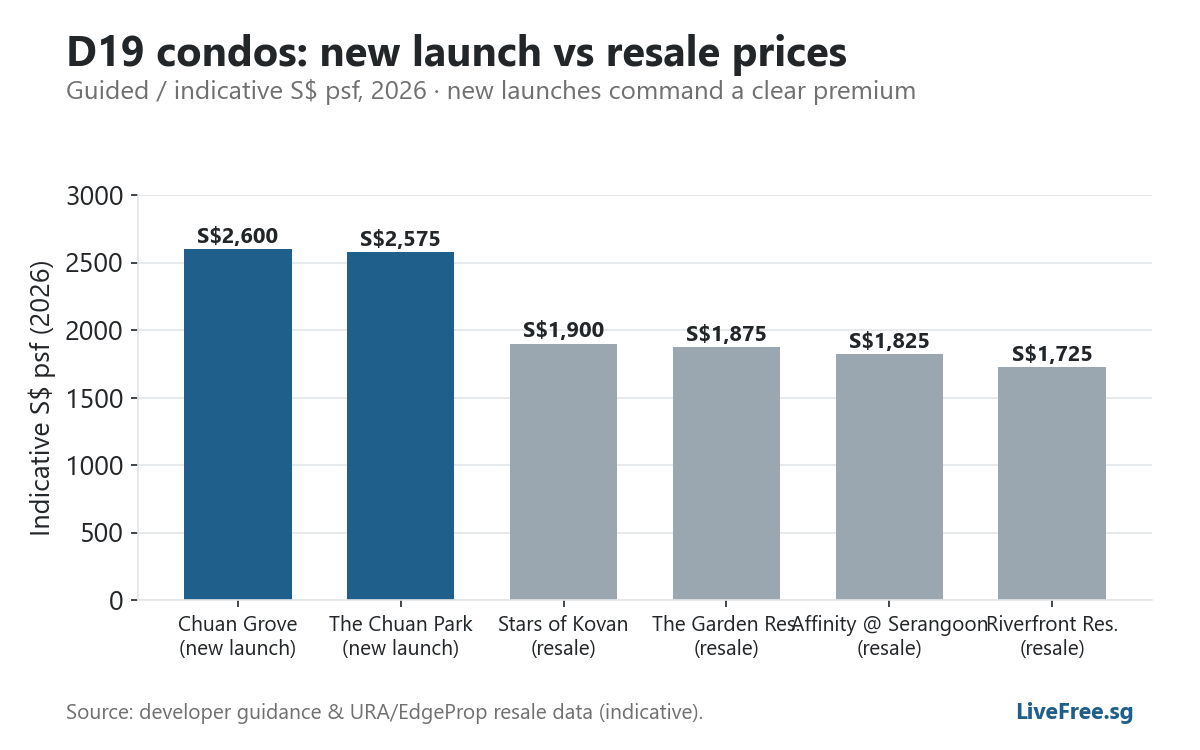
How to read this table: the two new launches sit a clear tier above the resale field — roughly S$700–S$900 psf higher. Among resale options, the newer, MRT-adjacent and integrated developments (Stars of Kovan) price toward the top of the resale band, while larger or further-out estates (Riverfront Residences) anchor the lower end. If you want the most current and detailed view of the new-launch side specifically, you can review our breakdown of One Chuan Grove launch prices.
The case for
The case against
The case for
The case against
This is where many buyers underestimate the difference.
For a new launch under construction, the Progressive Payment Scheme means you draw down your loan in stages tied to construction milestones. Your monthly instalments start small and rise as the project is built, which keeps early holding costs low. This suits buyers who are still selling an existing property, or who want to ease into the commitment.
For a resale unit, you complete the purchase up front. The full down payment is due, and your full monthly mortgage instalment begins almost immediately — but so does your ability to live in it or rent it out. For an investor, that immediate rental yield can offset the higher monthly outlay; for an own-stay buyer who is currently renting, moving in now stops the “double housing cost” clock.
A practical rule of thumb: if you are cash-tight today but expect stronger income later, the new-launch progressive structure is friendlier. If you have the capital ready and want income or occupancy from day one, resale wins on cash-flow logic.
Honest answer: it depends on entry price and timing more than on the “new vs resale” label itself.
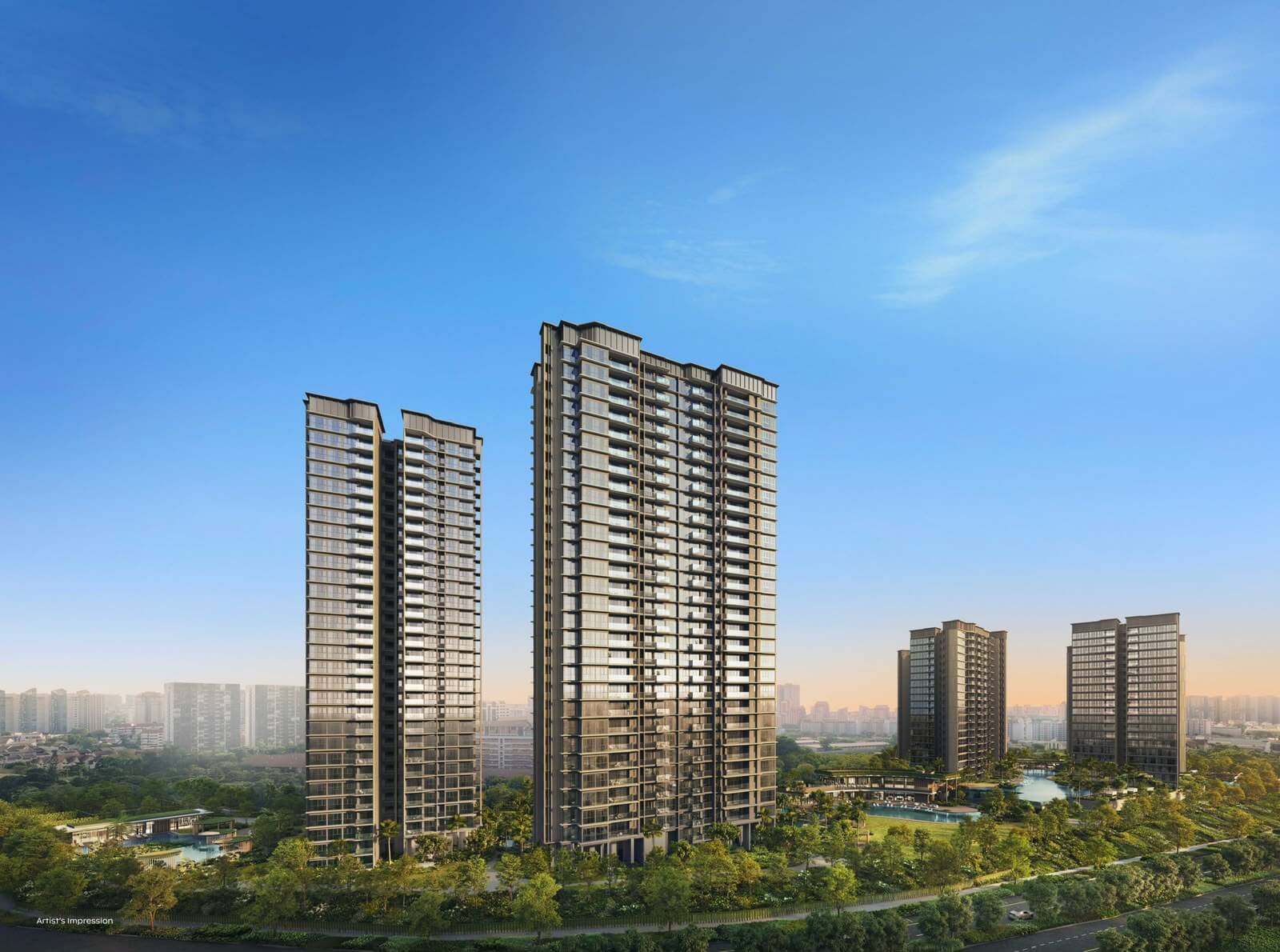
The bullish case for new launches in D19 rests on precinct renewal. The Lorong Chuan/Serangoon belt is seeing fresh supply (The Chuan Park, then Chuan Grove) injected into a mature, well-connected area. When a district’s newest stock resets prices higher, it can pull resale values up behind it — and early launch buyers sit on the right side of that move.
The bullish case for resale is the gap itself. When the spread between new and resale psf stretches to S$700–S$900, resale starts to look like relative value. Buyers priced out of new launches rotate into resale, supporting prices. Several well-located D19 resale projects have posted solid five-year gains precisely because they offer a mature-estate lifestyle at a sub-S$2,000 psf entry.
The risk on the new-launch side is buying the premium near a peak and watching resale catch up slowly. The risk on the resale side is lease decay quietly capping the ceiling over a long hold. Neither is a free lunch.
Lean new launch if you:
Lean resale if you:
For many D19 buyers the deciding factor is not ideology but timeline and liquidity. Map your own move-in date and cash position first; the new-vs-resale answer usually falls out of that.
Q: How much more expensive is a new launch than resale in District 19?
As of mid-2026, D19 new launches have been transacting above S$2,500 psf, while median D19 resale sits in the high-S$1,700s to low-S$1,800s. That is roughly S$700–S$900 psf, or several hundred thousand dollars on a typical three-bedder.
Q: Is the higher psf of a new launch always worth it?
Not automatically. New launches are smaller, fully fitted and start a fresh 99-year lease, so the raw psf overstates the quality-adjusted gap. Whether the premium pays off depends on your hold period, entry timing, and whether the precinct’s prices keep rising.
Q: Which District 19 new launches should I be watching in 2026?
The Chuan Park (launched November 2024, by Kingsford and MCC) is the recent benchmark, and Chuan Grove — the Sing Holdings–Sunway JV project of around 1,055 units off Lorong Chuan — is the major upcoming launch, expected around the fourth quarter of 2026.
Q: What’s the cheapest way into District 19?
On entry psf, resale is generally cheaper — projects such as Riverfront Residences in Hougang have traded in the low-S$1,700s psf. But factor in remaining lease, renovation, and that the full purchase price is due up front.
Q: Does the progressive payment scheme apply to resale?
No. The Progressive Payment Scheme applies to new launches still under construction. Resale completions require the full down payment and your full mortgage instalment begins on completion.
Q: Is District 19 a good place to buy in 2026?
D19 has shown strong multi-year price growth and benefits from heavy infrastructure investment, including Cross Island Line connectivity, and a maturing Lorong Chuan precinct. As with any purchase, the right project, entry price and tenure matter more than the district label alone.
Q: Are the resale projects in the table all 99-year leasehold?
The representative resale projects cited here are 99-year leasehold developments, so remaining lease is a real consideration on a long hold. Always check the exact remaining tenure of the specific unit.
This article is general information, not financial or investment advice. Speak to a licensed property professional before making a decision.
Image credits: location photos via Wikimedia Commons – ZKang123 (CC BY-SA 4.0); S5A-0043 (Attribution). Charts and infographics by LiveFree.sg.
Hi 
We offer private property consultations for readers. Interested?