


A subsale condo can be a genuinely smart entry — but only when you are buying below true value from a motivated seller. Too often, the “discount to TOP price” is just tomorrow’s price charged today.
Subsale — buying a unit from its original purchaser before the project even reaches TOP — went from niche transaction to dinner-table topic over the past few years. Rapid new-launch price growth handed early buyers fat paper gains, and a secondary market sprang up to trade them.
Agents pitch it as the sweet spot: newer than resale, cheaper than the next launch, faster than waiting four years for TOP. Sometimes that is all true. Often it is not. Let’s break it down properly.

Subsale sits between new launch and resale, but behaves like neither. You get no developer early-bird pricing, and no completed unit to inspect. You get a shorter wait and a market-negotiated price.
The subsale market only thrives when early buyers are sitting on gains worth harvesting. That tells you something important about the moment you are buying into: prices have already run.
The seller’s asking price is anchored to the latest launch benchmarks nearby, plus a projection of what the unit “will be worth at TOP.” Which brings us to the core problem.
The classic subsale pitch: “Cheaper than what it will be worth at completion.”
That claim silently assumes:
Run the arithmetic that matters instead. If you pay $2,3xx psf on subsale and post-TOP resale in the area stabilises around $2,4xx psf, your margin — after buyer’s stamp duty and years of progressive interest — is close to nothing. You carried real risk for a rounding-error reward.
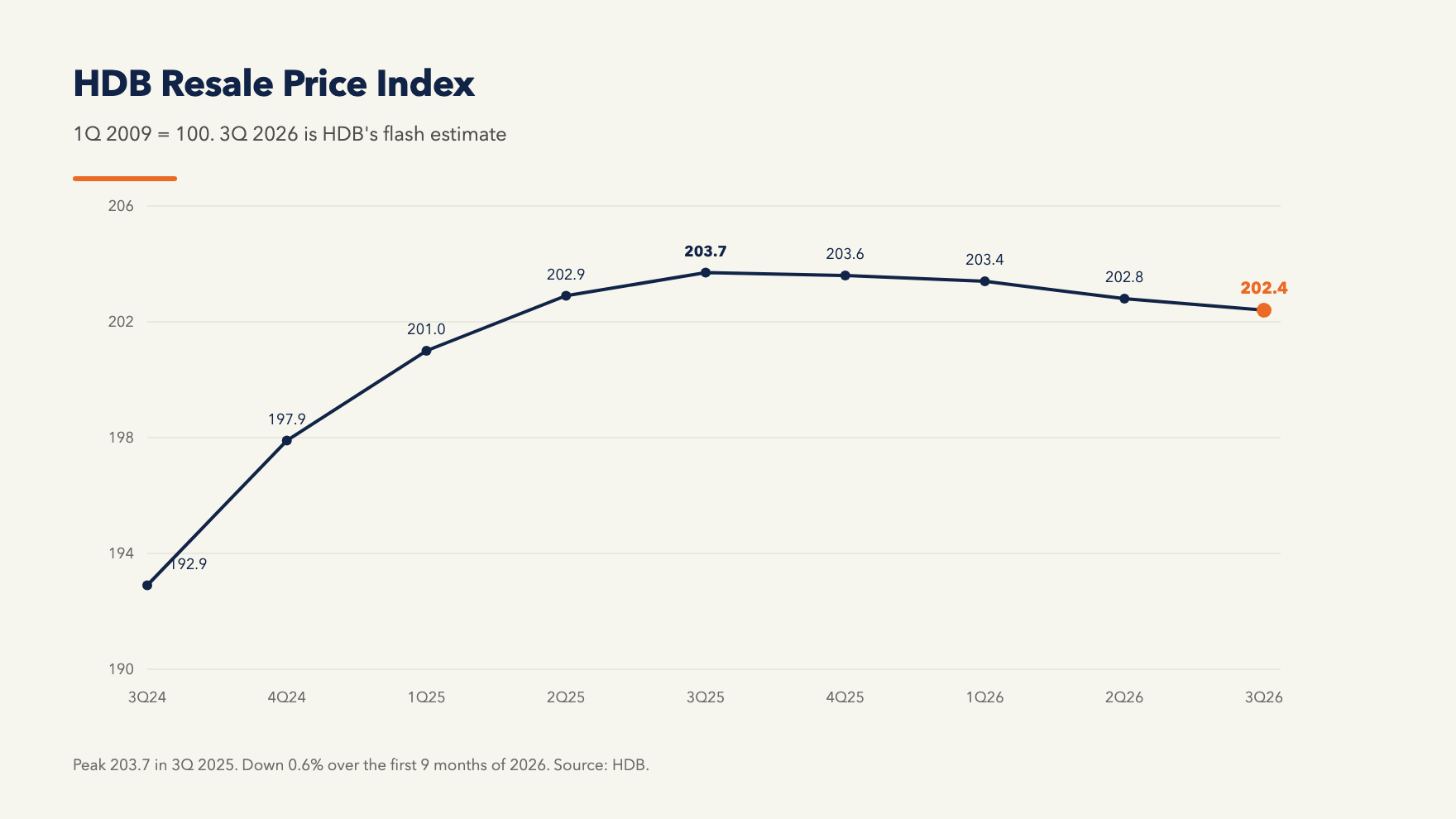
Compare every subsale offer against current resale benchmarks nearby, not against a projected future. The 2025 market’s own data showed growth moderating — projection-based pricing deserves extra scepticism precisely when the pitch relies on it most.
Seller’s Stamp Duty was tightened in July 2025, squarely targeting this market: the holding period extended to 4 years, at rates of 16% / 12% / 8% / 4% by year of sale.
Two consequences:
Net effect: subsale in 2026 is a buyer’s opportunity to negotiate with sellers who genuinely need out — and a terrible venue for short-term speculation.

Resale deserves particular respect in this comparison. With subsale premiums where they are, a well-chosen completed unit nearby often delivers better yield and immediate utility at a comparable psf.
The checklist where subsale earns its place:
If two or three of these line up, subsale can be the best-priced door into a project you already wanted.
And one honest tell from the ground: when everyone — agent, seller, forum, cousin — agrees a subsale unit is a sure thing, the value has usually already been priced out of it.
In property, value is never about when in the construction cycle you buy. It is about what you pay — and for subsale, the line between smart and overhyped is usually a few hundred psf wide.
A unit bought from its original purchaser before the project is completed (pre-TOP). You take over their position at a negotiated price, and progressive payments continue on schedule.
Sometimes — but benchmark every subsale offer against current resale prices nearby, never against projected TOP values. If the price already assumes future growth, the discount is an illusion.
Not on buying — but your own 4-year SSD clock starts at purchase: 16% / 12% / 8% / 4% by year of sale since July 2025. Quick-flip strategies are effectively dead.
Resale gives immediate rental income and full price transparency; subsale gives a newer product on a shorter wait. Run the rental yield math and let the numbers decide.
Planning your own move? Contact Kelvin on WhatsApp — a question costs nothing.
Hi 
We offer private property consultations for readers. Interested?