

In most Singapore towns, the condo market has an engine underneath it. Flats reach their Minimum Occupation Period, families sell, and a share of them buy private nearby. That flow sets a floor under prices and it is why a Tampines or a Punggol condo has a predictable local buyer.
The East Coast does not have that engine.
District 15 contains 91 HDB blocks and 14,090 units, of which 11,215 are actually built. Every one of those built flats was completed between 1962 and 1985. There is no recent cohort, because there is almost no HDB here at all.
If you are buying a condo on the East Coast, this matters more than any amenity. It tells you who you are bidding against, and it is not the neighbours.
| Blocks | Units | Completed | 3-Room | 4-Room | 5-Room | Executive | |
| Marine Parade | 59 | 7,855 | 1974 to 1976 | 3,022 | 1,798 | 1,684 | 0 |
| Geylang East (Haig Road, Joo Chiat Road) | 17 | 1,843 | 1975 to 1985 | 1,045 | 537 | 252 | 3 |
| Tanjong Rhu (Jalan Batu, Kampong Arang) | 13 | 1,517 | 1962 to 1966 | 832 | 134 | 196 | 53 |
| Built total | 89 | 11,215 | 1962 to 1985 | 4,899 | 2,469 | 2,132 | 56 |
3 pockets. That is the entire public housing footprint of a district holding 475 condo projects and 34,346 private units.
Private homes outnumber public ones by roughly 3 to 1 here. In Singapore as a whole the ratio runs the other way, and heavily.
Note the Executive column: 56 units in the whole district, and 0 in Marine Parade. In most mature towns the executive flat and maisonette owners are the upgrader class, because they hold the biggest sale proceeds. The East Coast has essentially none of them.
There are 2 more HDB projects coming, both in Tanjong Rhu, and they are the exception that proves the rule. Section 4 deals with them.
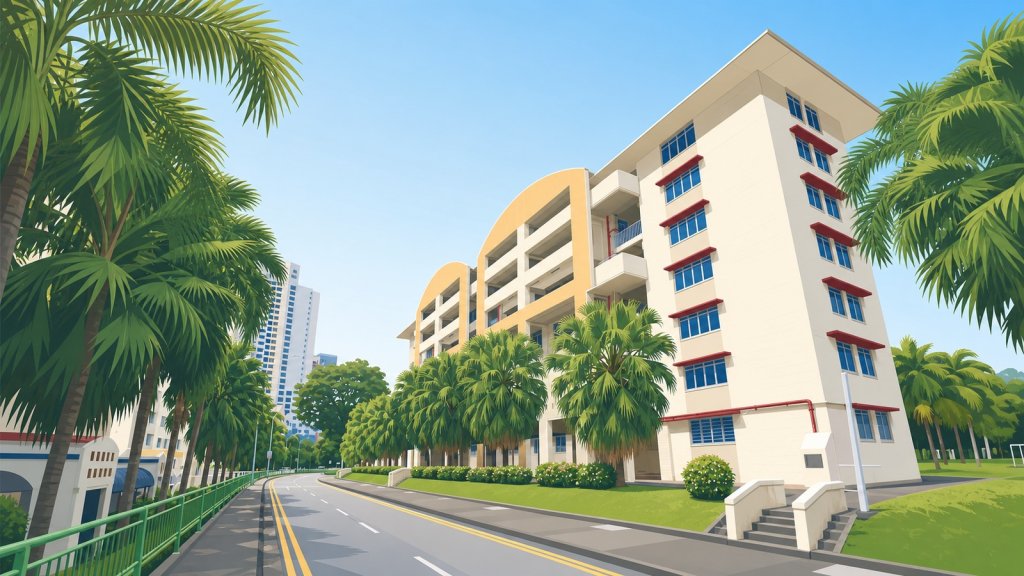
Go pocket by pocket and the age is the same story everywhere.
Marine Parade was built in 3 years and never added to. All 59 blocks completed between 1974 and 1976. HDB has not built a flat there in 50 years.
Tanjong Rhu is older still. The Jalan Batu and Kampong Arang blocks date from 1962 to 1966, which makes them among the oldest occupied public housing in Singapore.
Geylang East is the youngest and it is not young. Haig View and Haig Vista run 1975 to 1981, and the 2 Joo Chiat Road blocks completed in 1985. That is the newest built HDB address in District 15.
A flat completed in 1985 is 41 years old. Its owners, if they were ever going to upgrade, did it in the 1990s or the 2000s. What remains is a settled population, much of it second-hand owners who bought at market price and have no windfall to spend.
Even a settled population transacts. Here is what the East Coast HDB stock actually trades at, from the full resale record.
| Street | Last sale | Last price | 2024 to 2026 median |
| Marine Crescent | Jul 2026 | $1,100,000 | $505,000 |
| Marine Terrace | Aug 2026 | $940,000 | $513,000 |
| Joo Chiat Road | Jul 2026 | $780,000 | $620,000 |
| Kampong Arang Road | Mar 2026 | $728,888 | $739,444 |
| Marine Drive | Aug 2026 | $630,000 | $649,000 |
| Kampong Kayu Road | Mar 2026 | $500,000 | $439,444 |
| Haig Road | Aug 2026 | $448,000 | $451,888 |
| Jalan Batu | Aug 2026 | $328,000 | $340,000 |
The last sales on Marine Crescent and Marine Terrace reached $1,100,000 and $940,000, which are genuine 5-room prices. But look at the median column beside them: $505,000 and $513,000. The stock skews heavily to 3-room flats, and 3-room flats do not fund a private purchase.
Kampong Arang Road is the strongest median at $739,444.
Jalan Batu sits at a $340,000 median. Those are 1960s flats on short remaining leases.
Run the upgrade math on that. A median East Coast flat seller is releasing somewhere between $340,000 and $739,444 gross, before the outstanding loan and the CPF refund come out. The cheapest 3-bedroom condo in the district transacts well above $2,000,000, and the newer stock is dearer still: Emerald of Katong at $2,601,000 and Grand Dunman at $2,847,000 for a 3-bedroom, 3-bathroom unit.
The gap is not bridgeable on a flat sale. That is the whole argument, in one line.
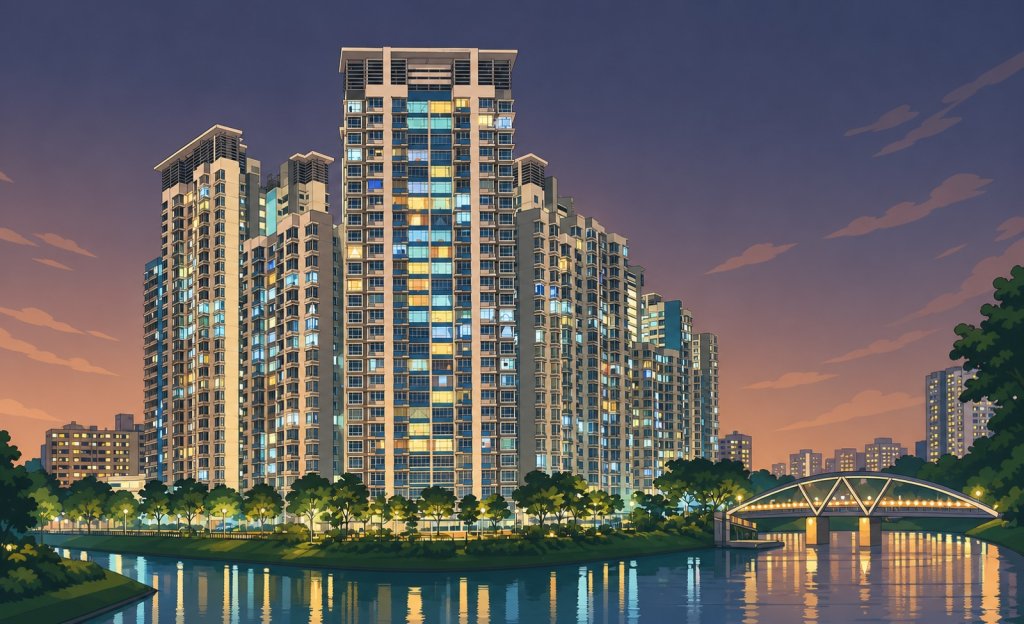
District 15 is getting new public housing for the first time in 40 years, and it still will not produce upgraders.
Tanjong Rhu Parc Front was launched in the February 2025 BTO exercise, the only Prime project in that exercise. It sits bounded by Tanjong Rhu Road, the KPE and the ECP, with 812 units across 4 residential blocks, and 1 of those blocks holds 203 rental flats. A second project, Tanjong Rhu Riverfront 1 & 2, adds 2,063 units. Both complete around 2029.
3 features make them irrelevant to the upgrader question, and they compound.
The flats stop at 4-room. Parc Front offers 2-room Flexi, 3-room and 4-room only. There is no 5-room and no executive unit, which are precisely the flat types that generate an upgrade-sized cheque.
The prices are low by design. Excluding grants, a 2-room Flexi runs $211,000 to $364,000, a 3-room $399,000 to $519,000, and a 4-room $548,000 to $727,000. Prime flats are priced with additional subsidies so they stay affordable, which means the owner is not sitting on a windfall.
And the subsidy comes back. Parc Front carries a 9% subsidy clawback, taken as a percentage of the resale or valuation price, whichever is higher. Prime flats also carry a 10-year minimum occupation period. Counting from completion around 2029, that puts the earliest resale in 2039 to 2040.
Put it together. A household buys a 4-room Prime flat at up to $727,000, cannot sell it until 2039 at the earliest, and hands back 9% of the price when they do. That is a policy designed to stop exactly the windfall that funds a condo purchase.
The new flats will make Tanjong Rhu a better neighbourhood. They will not make it a source of private buyers.
There is a second way to test this that does not rely on counting flats: look at who is actually signing.
Caveat records carry the buyer’s address type, which separates an HDB address from a private one. On the East Coast, fewer than 30% of condo buyers give an HDB address. The few who do are mostly not from District 15, because the district has almost no HDB to come from.
Now compare that with a heartland district. In Tampines the split runs the other way and it is not close. Executive condos there draw close to 90% of their buyers from HDB addresses, and private condos 60% to 75%.
That is 2 completely different markets. In Tampines, HDB sellers are the market. On the East Coast they are a minority of it.
Both tests agree. Count the flats and there is nothing to draw from. Count the buyers and most of them did not live in a flat.
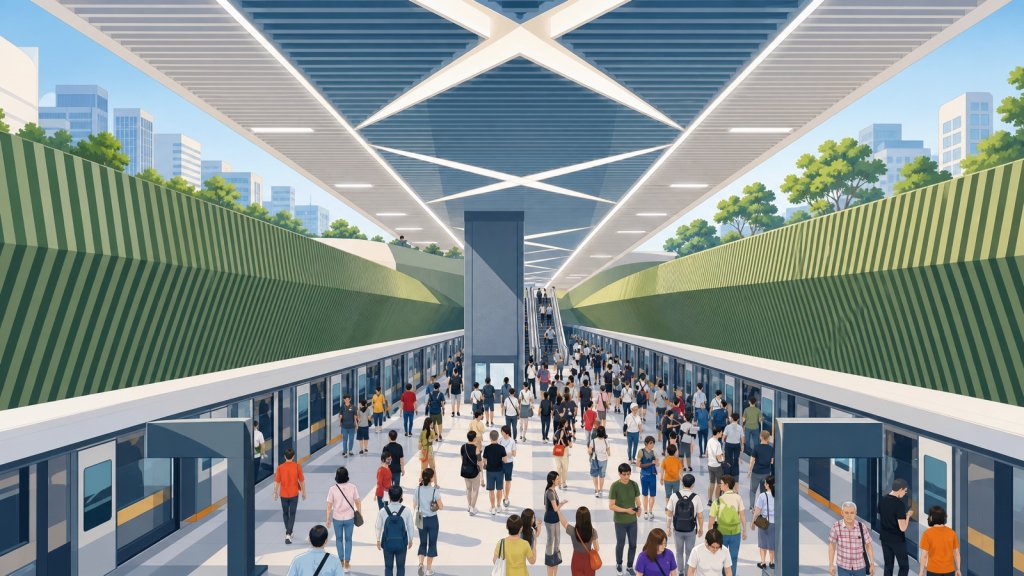
5 sources, in rough order of weight.
Private owners Right-Sizing both ways. Someone selling a condo in another district and buying here. This is the largest group, and it is why East Coast prices track the private market rather than the HDB one.
Households moving in for the coast and the schools. Frankel, Siglap and Katong pull families from across the island. That demand is about the address, not proximity. Seaside Residences and Amber Park both sell largely to buyers from outside the district.
Tenant converts. People who rented on the East Coast first, liked it, and bought where they were already living. The district has a deep rental market, and a tenant who has spent 2 or 3 years in Katong or Amber is a warm buyer who needs no convincing about the location.
Naturalised Singaporeans and permanent residents moving up. Buyers who arrived as PRs, took citizenship, and are making their first purchase with no HDB history at all. They never had a flat to sell, so they never appear in an upgrader count.
Foreign buyers. The freehold tenure is a large part of the draw. 445 of the district’s 475 projects are freehold, and the freehold picture explains why that matters to a buyer who cannot rely on a lease running out neatly.
Where a local flat sale does feed the coast, it mostly arrives from outside District 15: Bedok, Kallang/Whampoa, Geylang and the Dakota pocket. Those are separate towns with their own stock, and they are competing with everywhere else those sellers could go.
The price floor is softer than in a heartland district. In Tampines or Punggol, a wave of flat sellers with $700,000 to $900,000 in hand puts a floor under the entry-level condo market. Nothing does that here. East Coast prices are set by private demand, which is stronger in good conditions and thinner in bad ones.
Your exit buyer is a private buyer. When you sell, you are not selling to the neighbour upgrading out of a flat. Price and market accordingly, because that buyer is comparing your unit against other districts rather than against the block next door.
Entry-level stock has less natural support. A 2-bedroom in a heartland district has upgraders bidding for it, which is exactly the dynamic the Tampines HDB upgrader piece describes. The equivalent here relies on investors and singles, which is a narrower pool.
And the freehold premium is doing real work. With no local upgrader flow, tenure and location carry the whole argument. That is exactly why the district trades the way it does, and the family guide covers which pockets convert that into value.
If you are weighing an East Coast purchase and want to know who has actually been buying in a specific project, message me on WhatsApp and I will pull the transaction record for it.
[IMAGE SLOT: Aerial view of District 15 showing the density of private housing against limited HDB | alt: District 15, where 475 condo projects sit against 91 HDB blocks]
91 blocks holding 14,090 units, of which 11,215 are built. The rest are 2 Prime projects in Tanjong Rhu completing in 2029.
1985, at Joo Chiat Road. Marine Parade finished in 1976 and Tanjong Rhu’s older blocks date from 1962 to 1966.
Because there is no local upgrader flow putting a floor under prices. East Coast values are set by private demand, so the market behaves differently from a heartland district.
Medians between 2024 and 2026 run from $340,000 on Jalan Batu to $739,444 on Kampong Arang Road. Individual 5-room sales have reached $1,100,000 on Marine Crescent.
Barely. 56 executive units across the whole district and none at all in Marine Parade, which removes the household type that normally supplies upgraders.
No. Tanjong Rhu Parc Front and Riverfront add 2,875 Prime units around 2029, but they stop at 4-room, are priced with extra subsidies, and carry a 9% subsidy clawback on resale and a 10-year minimum occupation period that pushes any sale to 2039 or 2040. None of that produces an upgrader.
Mostly private owners trading between districts, families moving for the coast and schools, and foreign and permanent resident buyers drawn by freehold tenure. A district with 475 condo projects and 89 built HDB blocks was never going to behave like a heartland town, and understanding that changes how you price both your entry and your exit — send me the project you are considering on WhatsApp and I will show you who has actually been buying it.
Hi 
We offer private property consultations for readers. Interested?