

Who is actually buying Singapore’s new condos?
Where does a young family find $2.5 million?
And why do launches in some towns sell out in a weekend while others don’t?
The 3 questions have 1 answer, and it is not foreigners, not old money, and not luck.
It is HDB upgraders: 164,376 flats, 3-room and bigger, reached their Minimum Occupation Period in the last 10 years. The families holding them bought at a subsidized price and now sit on profits they can measure to the dollar.
This article explores where they live, shows the math behind their budgets, and explains why the towns they live in appreciate on a schedule.
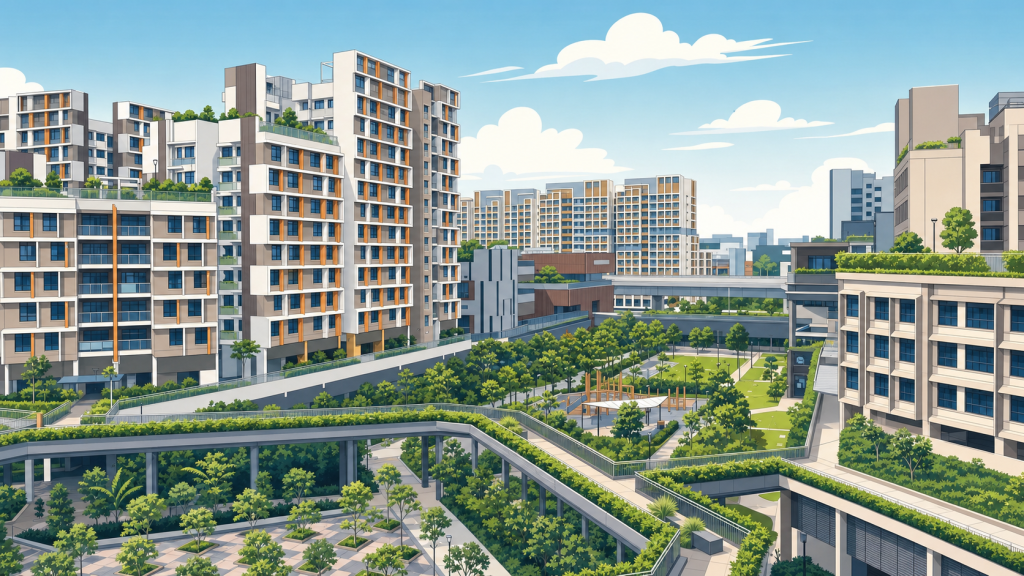
Nothing about this market happens randomly.
Start with who gets a BTO flat. HDB’s ballot quotas reserve at least 80% of 3-room and 90% of 4-room-and-bigger supply for First-Timer families in a standard launch.
Then the income ceiling caps who can apply at all: $14,000 a month per household for years, lifted to $16,000 in August 2026.
Filter by family status at one end and income at the other, and every BTO project becomes 1 demographic cohort. Married, similar age, similar income, all collecting keys the same year. It is also why almost every BTO project is built with at least 1 childcare centre. HDB knows exactly who is moving in, because it selected them.
The path is predictable because it was designed that way. The same “Singapore dream” – apply for a BTO between 21 and 30. Collect keys 3 to 5 years later. Serve the 5-year MOP. Upgrade somewhere between 30 and 45.
That window is not an accident either. 30 to 45 is exactly when most careers stabilize, and when the kids start primary school. The flat, the payslip and the school run all mature on the same clock.
Which is why HDB upgraders arrive as a wave, not a trickle. A whole BTO Cluster becomes eligible to sell in the same year, holding the same profit, at the same stage of life.
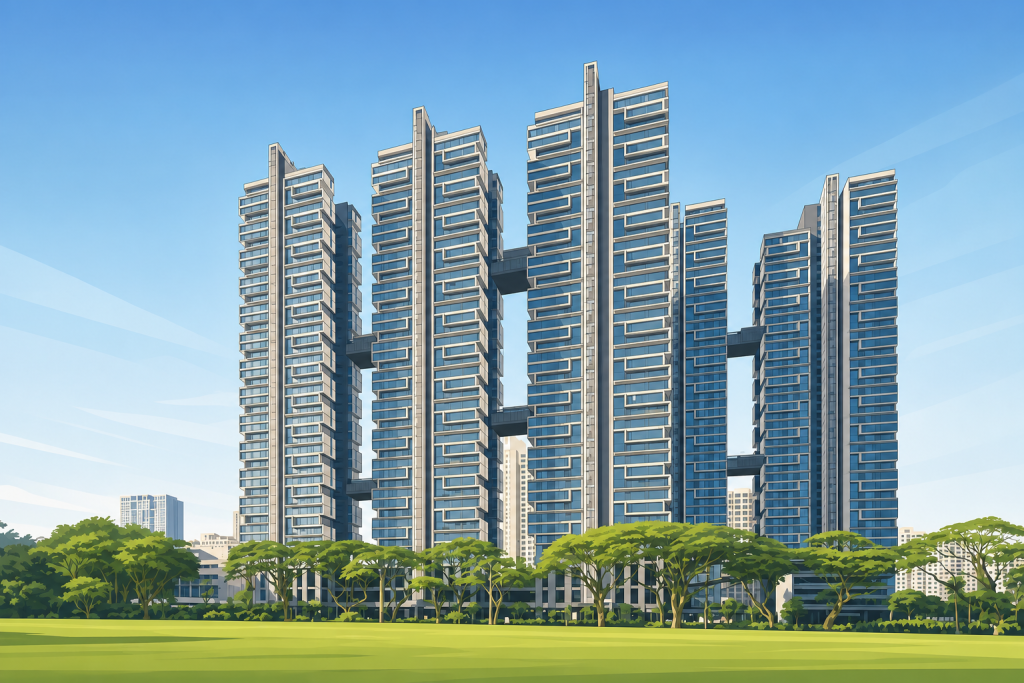
Take 2 BTO projects. Northshore Residences I and II in Punggol: balloted at the May 2015 BTO exercise, keys in 2020, MOP cleared in 2025. SkyTerrace @ Dawson in Queenstown: balloted December 2009, keys in 2015, MOP cleared in 2020.
Launch prices are the published starting prices at each exercise, before grants. Current prices are medians of actual resales recorded in 2025 and 2026.
Northshore Residences I & II, Punggol
| 3-room | 4-room | 5-room | |
| At launch (2015) | from $182,000 | from $284,000 | from $364,000 |
| Median now | $560,000 | $732,000 | $888,000 |
| Gross profit | $378,000 | $448,000 | $524,000 |
SkyTerrace @ Dawson, Queenstown
| 3-room | 4-room | 5-room | |
| At launch (2009) | from $280,000 | from $373,000 | from $532,000 |
| Median now | $801,500 | $1,190,444 | $1,550,000 |
| Gross profit | $521,500 | $817,444 | $1,018,000 |
A SkyTerrace 5-room owner is holding over $1 million of gross profit. Even the smallest cell on either table clears $370,000.
Now add the CPF, because the flat is only half the story.
Under the old $6,000 CPF salary ceiling, a family earning the $12,000 median household income put roughly $2,500 every month into their Ordinary Accounts. That is $30,000 a year: $300,000 of CPF built over 10 years, $450,000 over 15.
Sale profit plus CPF is the family’s capital. A SkyTerrace 4-room seller is sitting on roughly $800,000 of capital without touching a dollar of cash savings. At standard loan limits, that capital carries a budget of about $3 million, assuming the income supports the loan. The next section shows exactly how.
That is the answer to “why are Singaporeans so rich”. The system built HDB upgraders on a schedule, 1 cohort at a time.
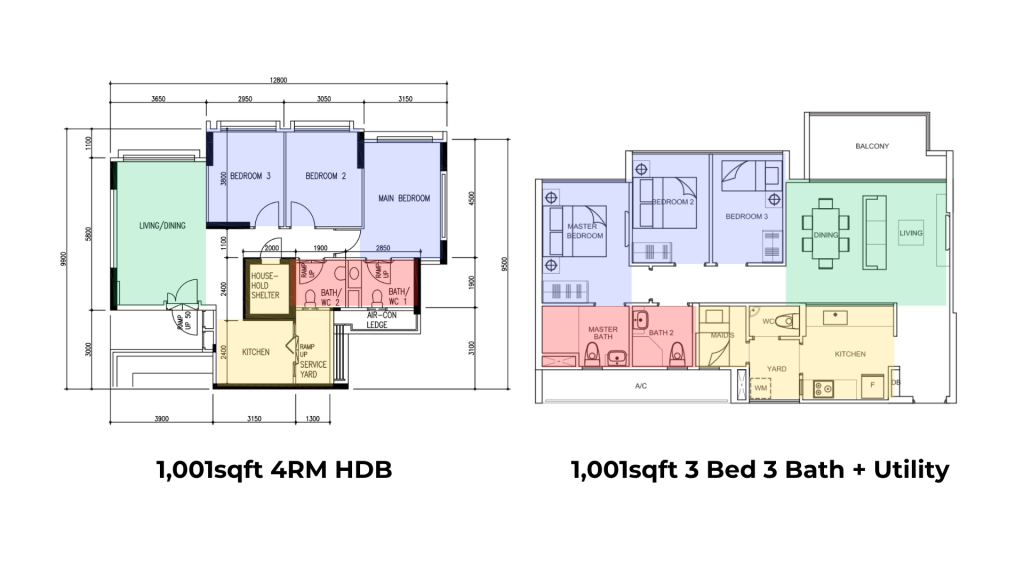
Here is how to make those numbers real.
A 4-room flat is roughly 1,000 sqft. The median price of a 1,000 sqft condo today runs $1.6 million to $1.8 million in Punggol.
The Northshore family holds about $450,000 of sale profit plus their CPF: call it $700,000 of capital. That funds the downpayment and stamp duty on a same-sized condo in or near Punggol with room to spare. The flat they sell and the condo they buy are a straight swap of address, not of lifestyle.
The SkyTerrace family holds $800,000 or more, and a budget near $3 million. At that level the choice widens: a bigger home, or the same 1,000 sqft closer to town. Higher income buys either 1 or both of those things, and the capital is there to support it.
So what do those 2 budgets actually take? Here is the full breakdown, on a 75% loan over 30 years at 1.5%:
| $1.8m condo | $3m condo | |
| Downpayment (25%) | $450,000 | $750,000 |
| Stamp duty | $59,600 | $119,600 |
| Total upfront | $509,600 | $869,600 |
| Loan (75%) | $1,350,000 | $2,250,000 |
| Income requirement | $11,718 | $19,531 |
| Monthly repayment | $4,659 | $7,765 |
Now read those upfront numbers against the capital from section 2.
The Northshore family’s $700,000 covers the $509,600 upfront on a $1.8m condo with room to spare, and the CPF flow that built their savings keeps servicing the loan. The SkyTerrace family’s $817,000 of profit plus their CPF OA meets the $869,600 upfront on a $3m purchase. In both cases, the cash savings account barely moves.
The only real gate is income. $11,718 a month qualifies the $1.8m loan. The median household income from work today is $12,027, so the typical dual-income family already clears it. The $1.8m condo is not a stretch purchase. It is the median family’s next address.
And here is the part that shapes prices: the majority of HDB upgraders buy back into the same or nearby locale. The parents are 2 blocks away, the kids are mid-stream in a school they queued for, the hawker centre is theirs. So Punggol sellers become Punggol condo buyers, and Dawson sellers shop the city fringe they already live in.
That is why HDB prices in a cluster almost mirror condo prices in the same area. The seller of 1 is the buyer of the other, working off the same capital. When the flats appreciate, the condos next door feel it within the same cycle.
Wondering what your own flat’s math looks like? Message me on WhatsApp and I will run the numbers for your block.
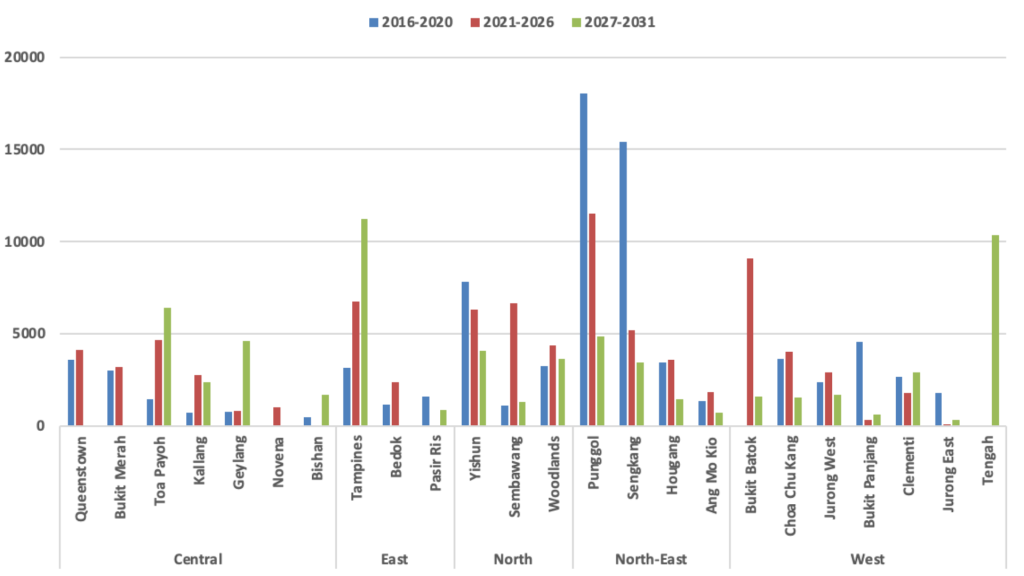
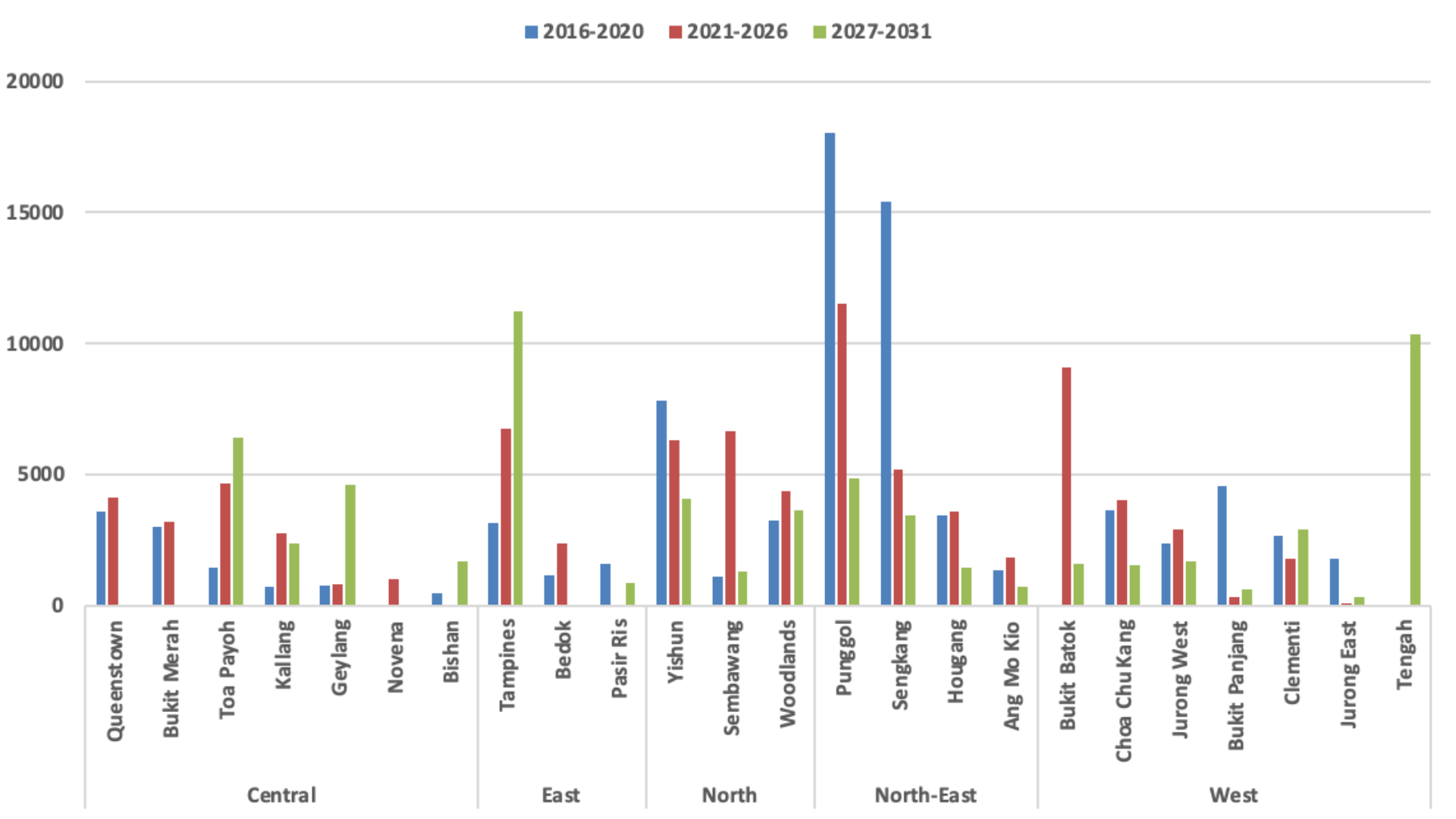
The pool we track is simple: 3-room and bigger flats that reached MOP between 2016 and 2026. Pipeline is flats reaching MOP from 2027 to 2031. Older stock cleared MOP before 2016.
Every town with an active pool of HDB upgraders is in this table.
| Town | Active pool (MOP 2016-26) | Pipeline (MOP 2027-31) | Older stock |
| Punggol | 29,515 | 4,823 | 19,219 |
| Sengkang | 20,590 | 3,454 | 44,525 |
| Yishun | 14,136 | 4,064 | 46,322 |
| Tampines | 9,891 | 11,213 | 61,533 |
| Bukit Batok | 9,068 | 1,569 | 31,668 |
| Sembawang | 7,747 | 1,281 | 18,135 |
| Queenstown | 7,670 | 0 | 21,013 |
| Choa Chu Kang | 7,658 | 1,523 | 38,983 |
| Woodlands | 7,608 | 3,619 | 56,293 |
| Hougang | 6,986 | 1,429 | 46,688 |
| Bukit Merah | 6,203 | 0 | 36,438 |
| Toa Payoh | 6,106 | 6,394 | 30,240 |
| Jurong West | 5,253 | 1,656 | 65,124 |
| Bukit Panjang | 4,864 | 619 | 29,617 |
| Clementi | 4,455 | 2,916 | 20,015 |
| Bedok | 3,486 | 0 | 54,975 |
| Kallang | 3,468 | 2,370 | 21,532 |
| Ang Mo Kio | 3,181 | 702 | 42,612 |
| Jurong East | 1,836 | 325 | 21,187 |
| Geylang | 1,595 | 4,604 | 24,301 |
| Pasir Ris | 1,576 | 858 | 27,229 |
| Novena | 1,004 | 0 | 6,524 |
| Bishan | 480 | 1,698 | 18,514 |
Towns with no flats reaching MOP since 2016, such as Marine Parade, Serangoon and the Central Area, are not listed. Their upgrader story is history, not pipeline.
4 things jump out of the table.
Punggol is the definitive upgrader town. Its active pool of 29,515 flats is bigger than its entire older stock. The wave is breaking now.
District 19 holds a quarter of the country’s HDB upgraders. Sengkang, Punggol and Hougang together carry 57,091 active flats.
Big towns are not big pools. Jurong West holds 65,124 older 3-room-plus flats but only 5,253 active ones. Bedok: 54,975 older, 3,486 active.
Tampines is the coming wave. 9,891 active today, but 11,213 flats reach MOP between 2027 and 2031, the largest pipeline in Singapore. Tampines North is about to repeat what Punggol just did.
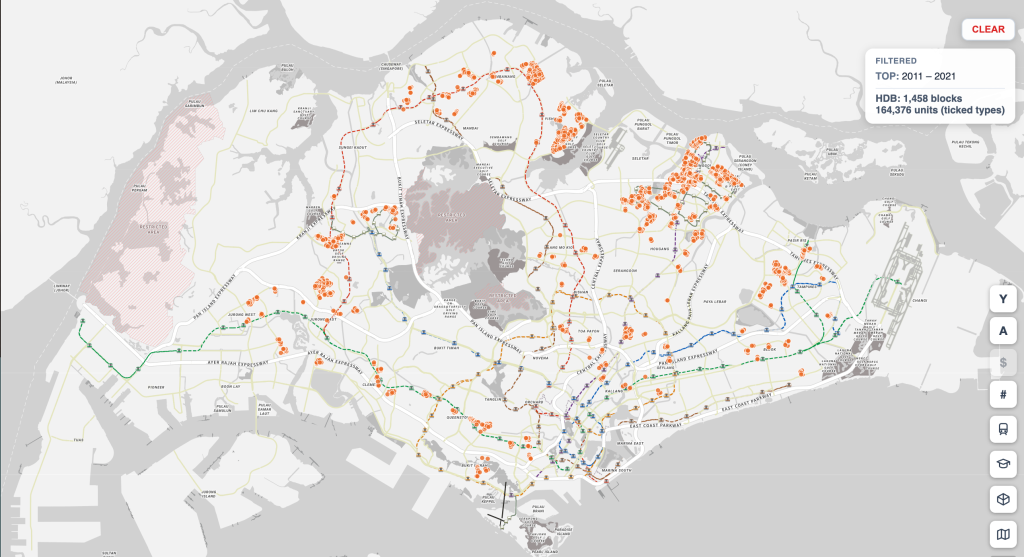
Put the math and the map together and you reach the question that decides every purchase: when you sell, who buys your unit?
The caveat record answers it. Every caveat lodged shows the buyer’s existing address, so any condo’s buyer profile is readable.
Organic demand. In upgrader towns, the condo buyers are the town’s own HDB upgraders. Pull the caveats on a Punggol or Sengkang condo and 6 to 7 in every 10 buyers list an HDB address. District 19 is the purest case: 57,091 active flats feeding a condo population less than a fifth the size of its HDB population.
Your exit here is predictable. The next buyer is the town’s next MOP cohort, arriving on a calendar you already saw in section 4, holding capital tethered to local flat prices. The floor is solid and the market is liquid.
Whether a town’s pool is growing or shrinking tells you which areas run hot and which run cold. Tampines has 11,213 flats reaching MOP from 2027, more than the last 10 years delivered, so its buyer pool is still growing. Queenstown has 0 in the pipeline: its wave has broken, and future sellers there wait on the private cycle instead.
Secondary demand. Move toward the centre and the buyer profile flips. In mature towns like Ang Mo Kio and Bishan, HDB upgraders still arrive, but from other towns: Punggol, Yishun and Woodlands families trading toward the centre. And 4 to 5 in every 10 caveats show a private address: second-movers, investors, families trading up. In Newton, River Valley and Bukit Timah, with little or no HDB at all, the mix is almost fully private.
Your exit here is richer but choosier. No MOP calendar delivers your buyer; the private cycle does. Ceilings run higher because the buyer is not capped by a flat’s value, but timing matters more, because that buyer shops when the cycle runs hot and vanishes when it cools.
So the exit strategy question is not “will it appreciate”. It is “who funds my exit”. In organic towns, sell into a wave year at a price the local capital carries. In secondary areas, sell on the private cycle, and be ready to hold through the quiet stretches.
65,468 flats reach MOP between 2027 and 2031, the next generation of HDB upgraders. The wave map:
| Town | Flats reaching MOP 2027-31 | What’s Happening? |
| Tampines | 11,213 | Tampines North, the largest coming wave |
| Toa Payoh | 6,394 | Bidadari: high prices in, high equity out |
| Punggol | 4,823 | The wave keeps rolling |
| Geylang | 4,604 | The quiet city-fringe build-up |
| Yishun | 4,064 | Steady second wave |
| Tengah | 10,351 | The west’s 1st wave, in a town with 0 older stock |
District 18 is the 1 district with more flats coming (12,071) than arrived in the last 10 years (11,467). If you sell in the east, your future buyer pool is growing, not shrinking.
Now apply section 5 and the map draws itself. When a wave lands, the condos priced within its capital sell first, and fast.
Tampines carries the largest wave in Singapore: 11,213 flats releasing capital into the east from 2027. Tengah carries the second: 10,351 flats, a brand-new cohort with nowhere local to upgrade yet, spilling into Bukit Batok, Choa Chu Kang and the Jurong condos. Toa Payoh’s 6,394 are the Bidadari generation, high prices in and high equity out, shopping the city fringe alongside Geylang’s 4,604.
Those are the launches and resale markets that will move like hotcakes between 2027 and 2031. The sellers who do best will be the ones holding the right unit 1 street from a wave.
The clock is changing, though. Flats launched under the Plus and Prime framework carry a 10-year MOP and a subsidy clawback on resale. The June 2026 exercise put Plus and Prime projects in Bishan, Bukit Merah and Ang Mo Kio: those owners cannot sell until around 2040, and will keep less when they do.
The 5-year windfall cycle that built 2 decades of upgrader demand is closing in the central towns. The current pipeline is the last of the fast cohorts.
5 years from key collection for standard BTOs and everything launched before late 2024. 10 years for Plus and Prime flats, which also carry a subsidy clawback when you sell.
Punggol (29,515 active flats), Sengkang (20,590) and Yishun (14,136). Tampines holds the largest coming wave, with 11,213 flats reaching MOP between 2027 and 2031.
Start from your flat’s value, subtract the outstanding loan, and add back your CPF. The HDB Upgrading Roadmap walks the sequencing, and the housing loan guide and the no-ABSD upgrade path cover the 2 decisions that follow.
Yes. A 10-year MOP plus resale clawback means later waves and smaller capital, especially in central towns. The math in this article belongs to the 5-year generation.
For many 3-room and 4-room sellers the numbers point that way. The executive condo upgrade guide runs the comparison. Your flat has a number, your town has a wave, and both are knowable — message me on WhatsApp before you decide to stay or go.
Hi 
We offer private property consultations for readers. Interested?