

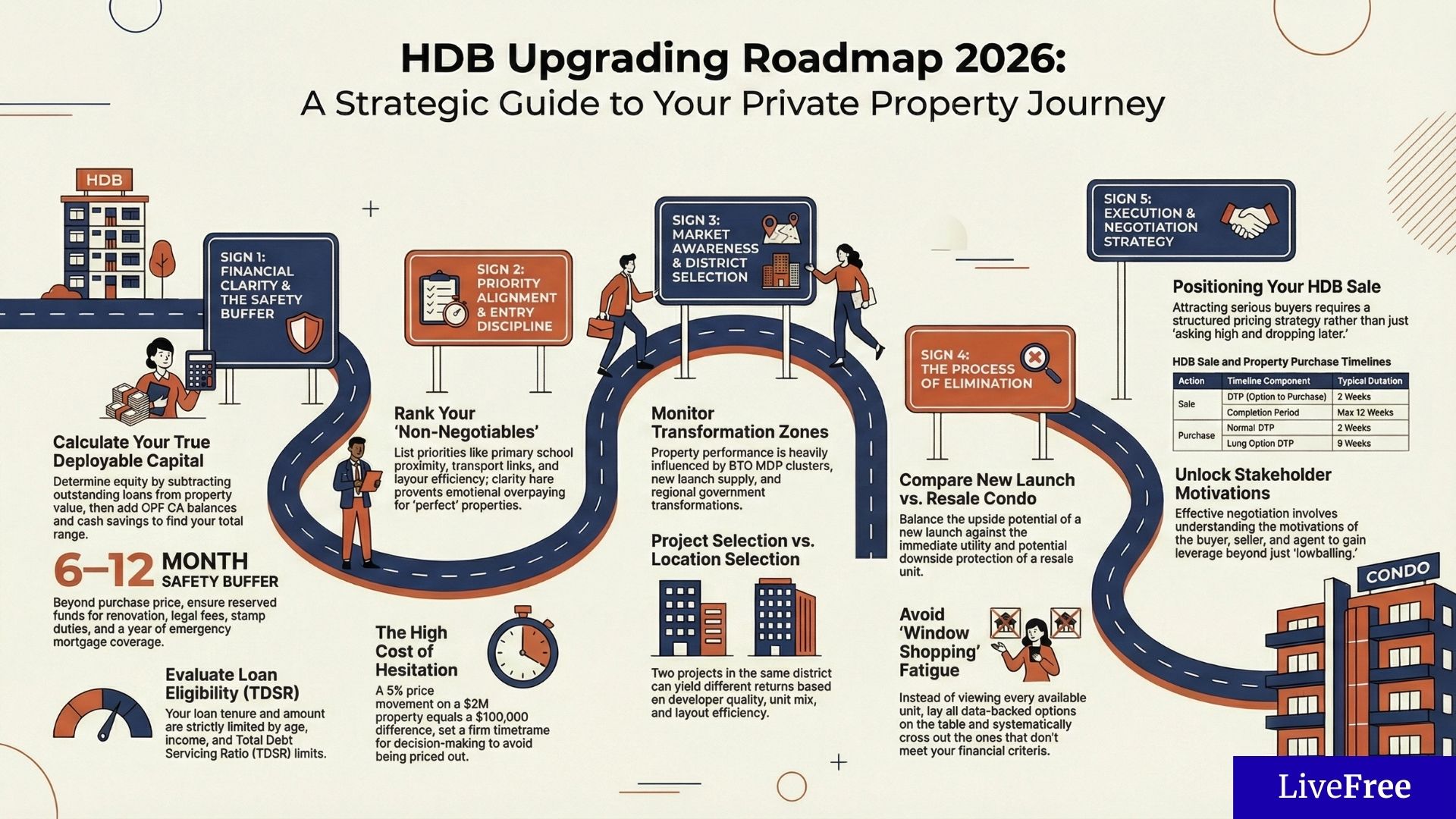
HDB upgrading is not a lifestyle decision made once. It is a sequence, and the order you do things in decides your outcome more than the project you eventually pick. If you are approaching MOP, this is the roadmap.
As we set out in the real cost of holding your HDB, the window is time-sensitive: borrowing capacity falls with age and prices keep moving. What follows is the structure we use, in the order it should happen.
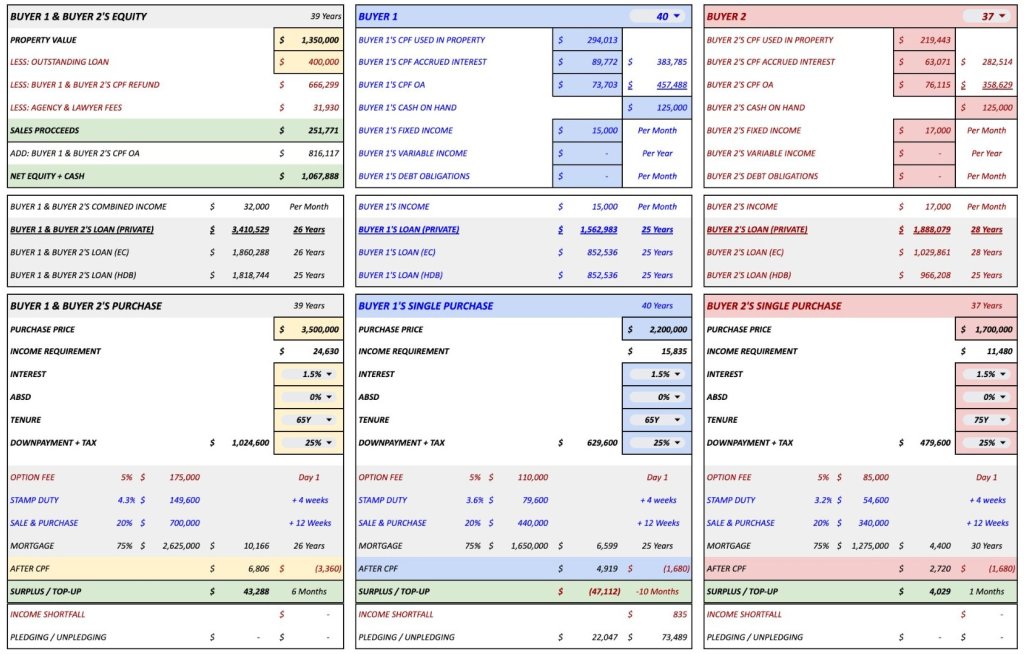
Property value less outstanding loan gives you equity. Add CPF Ordinary Account and cash savings to arrive at total deployable capital. That number, not the showflat, sets your search.
Four things decide it: age, income, TDSR limits and remaining tenure. Whether you take an HDB or bank loan changes the maths as well, which we compare in HDB loan versus bank loan.
Compare cashflow and returns across both scenarios, and set up the purchase with the right holding structure from the start. Restructuring later is expensive, and the ABSD rules are unforgiving about it.
Renovation budget, stamp duties and legal fees, plus six to twelve months of emergency funds. Your financial range determines where you should look and, more usefully, where you should not.
HDB upgrading is structured asset progression, not speculation.
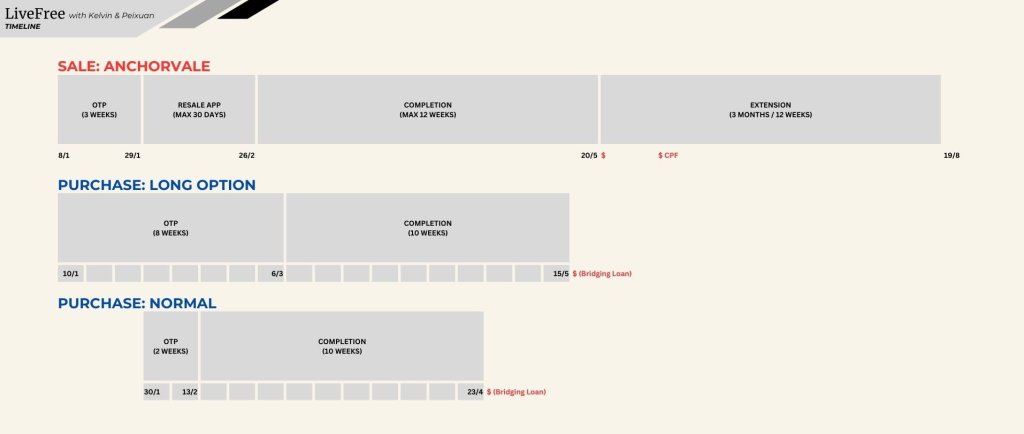
There is no perfect property in HDB upgrading. There is only the one that fits your priorities best.
Primary schools, transport options, layout efficiency, facing and floor level, key amenities. If a property checks every box it will carry a premium, and clarity here is what prevents emotional overpaying.
How long do you intend to hold? Which milestones in your family journey might trigger the next move?
This one decision drives cashflow stress, negotiation leverage and how smooth the transition feels. It deserves more thought than most upgraders give it.
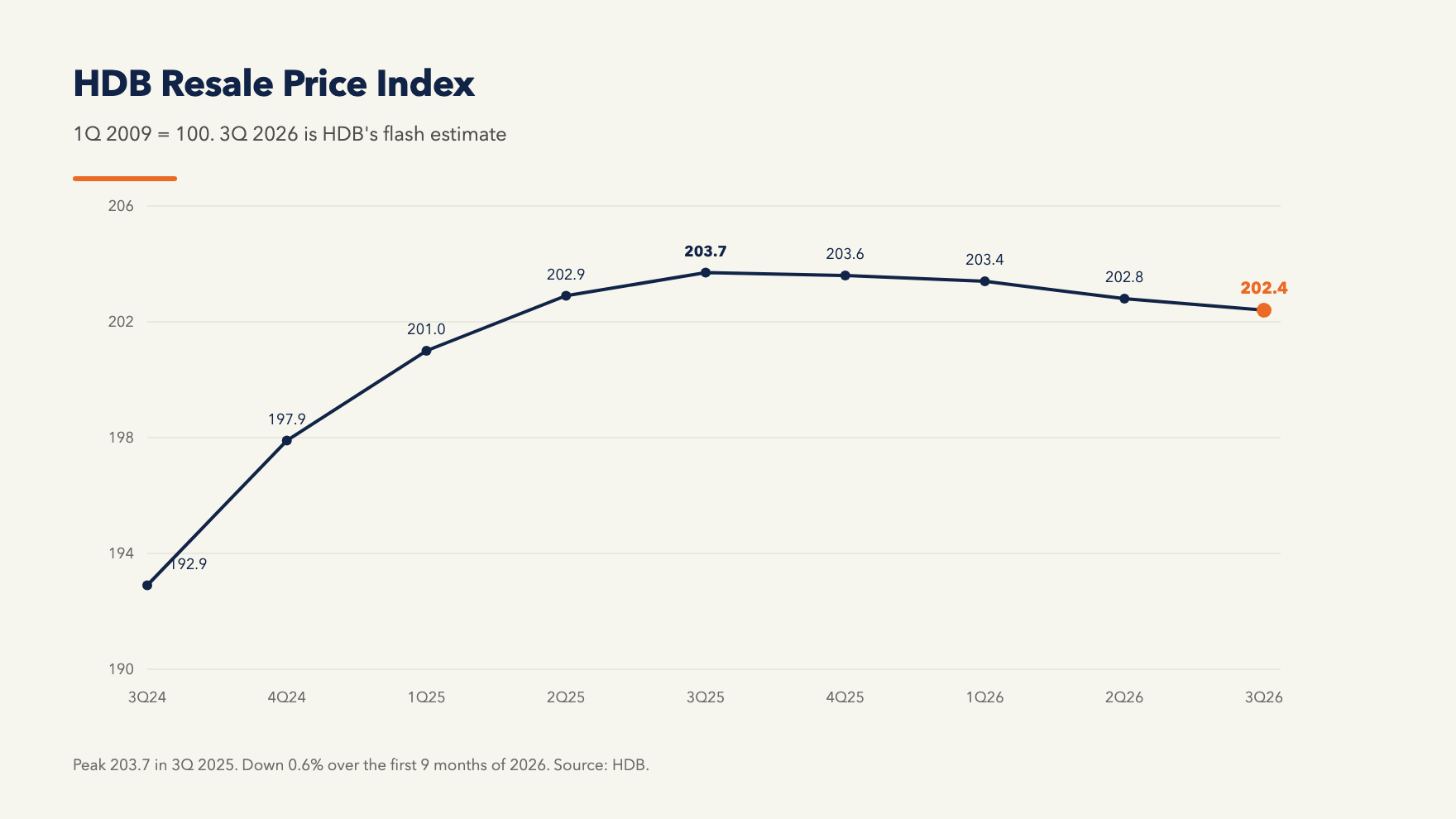
A 5% move on a $2 million property is $100,000. Set a timeframe for the decision. Some negotiations close quickly, most need time to produce a favourable result. Entry price discipline protects long-term returns and stops you getting priced out of a location, which the 2025 market data shows happening across several districts.
The two failure modes here are chasing endlessly until priced out, or hesitating into inaction.
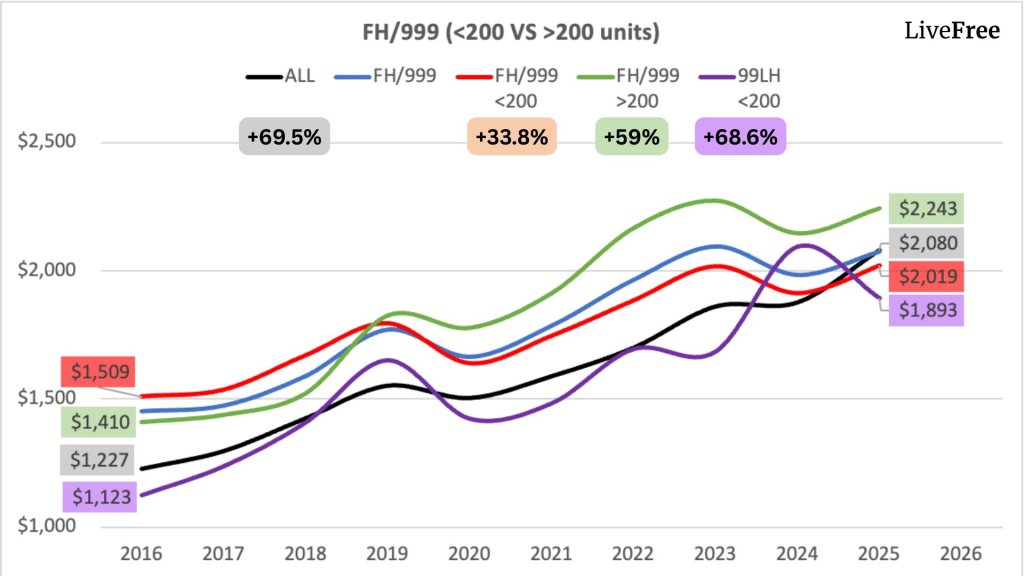
HDB upgraders drive Singapore’s private property market. But not all areas and projects perform equally.
Performance is shaped by BTO MOP clusters, new launch supply and transformation zones. Those three rarely align neatly, which is where opportunity sits.
Even within OCR, some districts outperform others year to year. Understanding regional dynamics improves your exit strategy, and our ten-year district study maps which have actually delivered.
Two projects in the same location can produce very different returns. Project size, age, developer, layout efficiency, unit mix and entry price separate winners from losers. Project scale in particular is under-appreciated, as our boutique condo analysis shows.
Layouts, facings and floor levels command different premiums and different resale demand. Which sizes hold value is covered in condo unit types.
In some areas resale outperforms new launch, in others the reverse. Balancing upside against downside protection is the point. Our subsale and resale comparison and 2026 launch shortlist cover both routes.
Tenure matters, but only in relation to entry price and holding horizon. The data on that is counterintuitive, and we set it out in 99 year vs freehold.

HDB upgrading is a process of elimination. Rather than going unit to unit hunting for the right one, lay every option on the table and cross out the wrong ones. You only need to compare the homes that matter, not every home available.
Sometimes resale beats a new launch. Sometimes renting for two or three years improves your positioning. But if rental cost erodes the upside, rethink the strategy. An EC may also do more for the same budget.

HDB upgrading means selling as well as buying. Some properties sell themselves. Most require positioning.
Asking high and dropping later is common but rarely optimal. There are structured ways to attract serious buyers, create competition and control the negotiation flow.
Negotiation is not lowballing. Every negotiation has three stakeholders, the buyer, the seller and the agent, and understanding their motivations is what unlocks leverage.
HDB upgrading in 2026 is not about chasing hype. It comes down to financial clarity, priority alignment, market awareness and execution discipline. If you are approaching MOP, map the strategy before viewing anything. Every household’s numbers differ, and CPF rules change what is possible for each of them.
Roughly 12 to 18 months before MOP. HDB upgrading takes longer to prepare than most people expect. Financial positioning, deciding buy-first or sell-first, and entry price discipline all take time, and none of them can be rushed once you are viewing.
It depends on your cashflow buffer and appetite for transition risk. Selling first gives certainty and negotiating leverage but means arranging interim housing. Buying first is smoother but demands far more holding power.
Plan for 25% down, at least 5% of it in cash on a bank loan, plus stamp duties and legal fees. On a $2 million condo that is roughly $500,000 before renovation. The real cost of holding your HDB covers what waiting costs instead.
Rarely without ABSD, and the holding structure has to be set up correctly from the start. Read upgrading without paying ABSD before assuming either way.
Flats reaching MOP nearly double in 2026, so you will face more competition from other sellers while the launch pipeline narrows. That argues for planning earlier rather than later. Full context in our 2025 full-year review.
Working out whether HDB upgrading makes sense for your numbers? Contact Kelvin on WhatsApp — a question costs nothing.
HDB upgrading is design, not luck. Strategy compounds quietly, and the window narrows with age.
Hi 
We offer private property consultations for readers. Interested?