

A Hougang condo buys you space and a mature estate, and it asks you to give up prestige. That is the whole trade, and buyers who are honest about it tend to be happy here for a decade. Buyers who wanted Serangoon and settled for Hougang usually are not.
Hougang sits in the middle of District 19: NEL access, a deep flat population, an ageing private stock and a Cross Island Line upgrade on the way. This guide covers what a Hougang condo actually costs you in trade-offs, and who it fits.
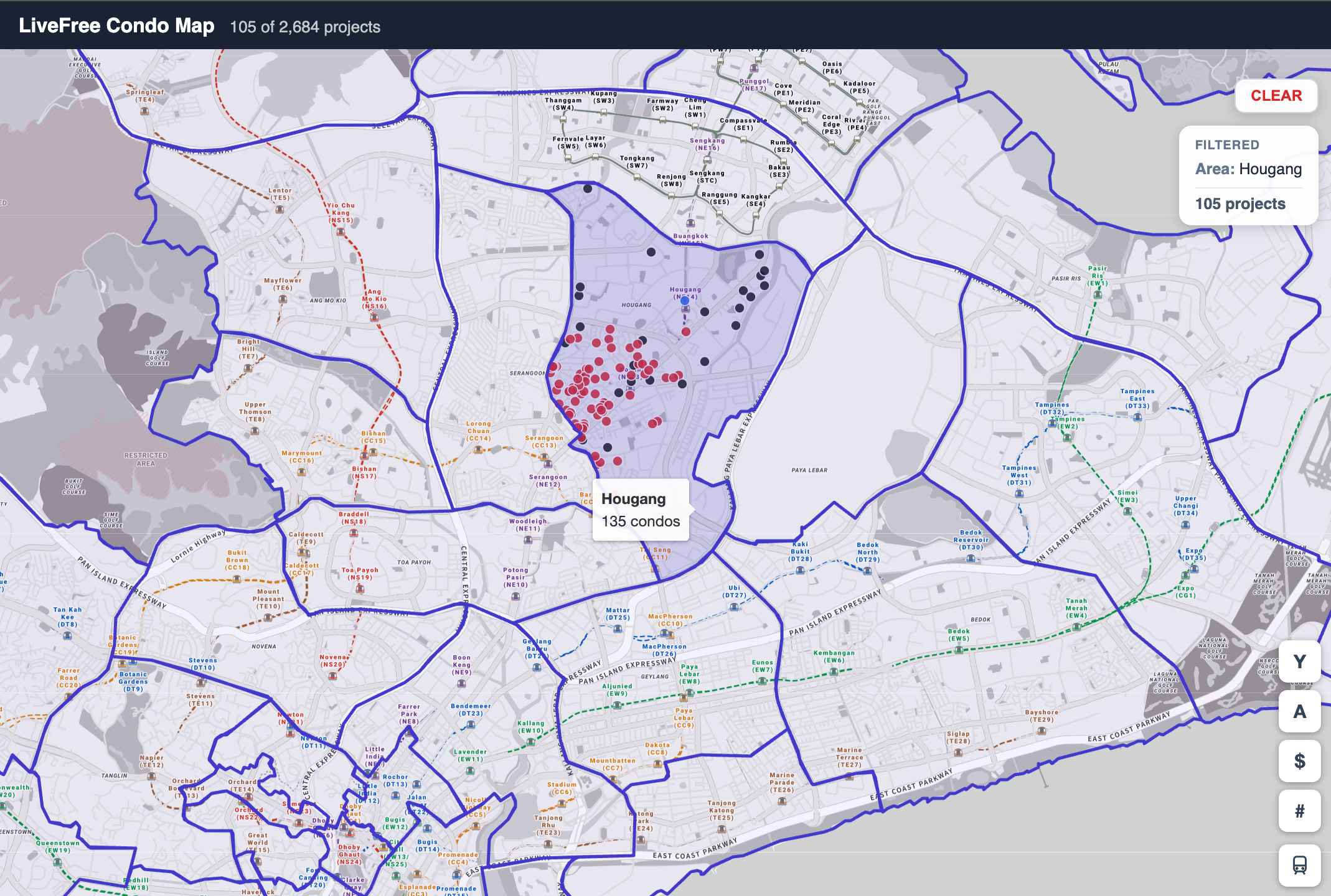
Start with the count. Our condo map finds 105 private projects inside the Hougang planning area. The private stock here is mostly mid-sized and mostly a decade or more old. There is very little brand new, which is unusual for District 19 and explains why a Hougang condo often looks cheap per square foot against Serangoon or Lorong Chuan.
Nearby benchmarks worth pricing against include The Minton, Riverfront Residences and The Florence Residences.
Filter the same map to projects of 200 units or more and only 22 remain. That is the full-facility tier of the Hougang condo market, and it is where most upgraders should be looking.
That thinness matters more than it sounds. When a district has no recent completions, buyers have no fresh benchmark to argue against, and pricing drifts with the resale market rather than being reset by a launch. It is one reason Hougang has been quietly stable while newer estates swung harder in both directions.
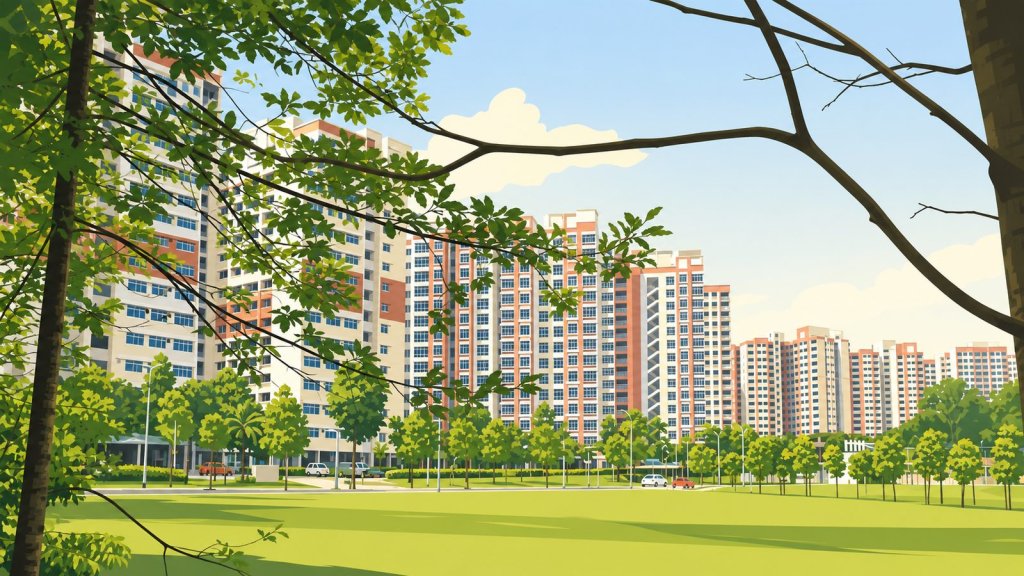
The school angle deserves its own line. The Kovan and Serangoon belt draws families who would otherwise look at Bishan or Ang Mo Kio, and proximity works on a one-kilometre radius that does not care about district boundaries. Parents planning around registration should work from the ballot history rather than from a school’s reputation.
A Hougang condo suits investors chasing headline yield less well. Tenant demand is local and steady rather than premium, so occupancy is easy and rents are ordinary.
The net yield arithmetic is in our rental yield guide, and condo unit type data explains why the larger layouts here hold demand better than the compact ones.
Set against that, a Hougang condo typically buys 15 to 25 percent more floor area than the equivalent budget in Serangoon proper, and that gap is the reason most of our Hougang clients end up staying put rather than moving on after five years.
Put that in cash terms. On a $1.6 million budget, the extra floor area a Hougang condo buys over an equivalent unit in Serangoon is usually a genuine additional bedroom, or a study that functions as one. For a family with two children, that is the difference between a home that works for ten years and one that works for four.
Hougang becomes an interchange when the Cross Island Line opens, which widens the pool of buyers and tenants who will consider it. Announced infrastructure prices in early, so treat it as partly paid for rather than as free upside. The scheme is documented by LTA, and we modelled the price effects in our Cross Island Line analysis.
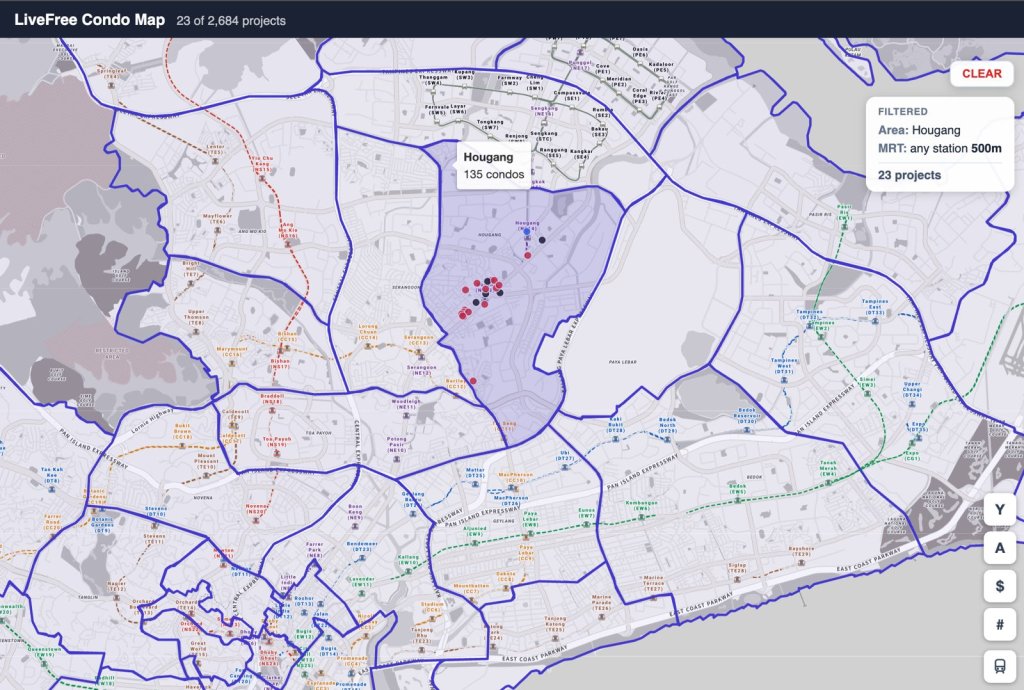
Here is the map that explains why the interchange matters. Only 23 of Hougang’s 105 projects sit within 500 metres of a station today. When the Cross Island Line opens its stations, that map redraws, and the projects that gain a station gain it for free.
One habit worth adopting: price the units you are comparing on internal area rather than strata area. Older Hougang stock tends to have modest balconies, while newer competing projects elsewhere carry larger ones, and that difference quietly flatters the newer building on headline price per square foot.
For the district-level picture, our District 19 condo layout analysis and the city-fringe case for District 19 both sit alongside this. Transacted evidence by project is published by URA.
For steady owner-occupier resale demand, yes. For rental yield or rapid capital growth, it is average. Compare it honestly against other suburban options using our district performance analysis.
Hougang is more mature, closer to town on the NEL and has a deeper amenity base. Sengkang is newer, has more modern stock and generally costs less per square foot. Commute time usually decides it.
Consistently less for the same floor area, because Serangoon carries the NEX interchange and the stronger school belt. Our Serangoon and Lorong Chuan comparison covers what that premium buys.
It widens the buyer pool, which supports prices over time. But announced infrastructure is rarely free upside by the time you buy. See our Cross Island Line piece for how much typically gets priced in before opening.
Planning your own move? Contact Kelvin on WhatsApp — a question costs nothing.
Hi 
We offer private property consultations for readers. Interested?