

By Kelvin Sin, Co-Founder of LiveFree · CEA Reg. No. R062804F
Last updated: July 2026
If you are weighing up a move to the quiet north-east pocket around Lorong Chuan station, this Lorong Chuan MRT guide is written to give you the honest, sourced picture that most “ultimate guide” pages skip. Lorong Chuan is one of those enclaves that Singaporeans know by feel rather than by fact: leafy, low-rise, family-heavy, well-schooled, and better connected than its sleepy character suggests. Below we cover the station itself, the Circle Line connectivity that defines daily life here, what is genuinely within reach, the schools that draw families and expats, and who this enclave actually suits. Where a figure is indicative, we say so and cite where it comes from.
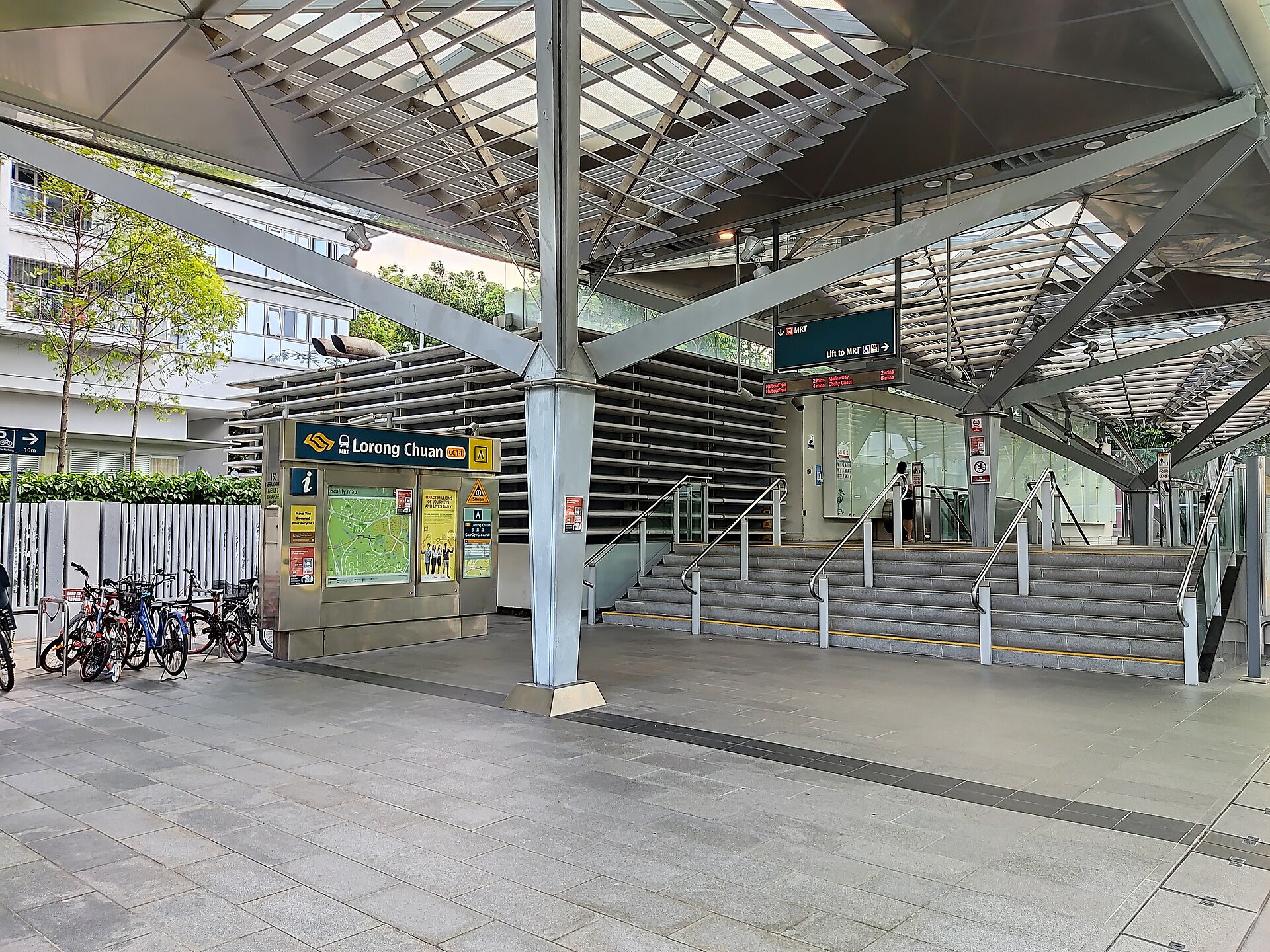
Lorong Chuan MRT station carries the code CC14 and sits on the Circle Line (CCL). It opened on 28 May 2009, is fully underground with a single island platform, and offers barrier-free access at both exits. Its official address is 150 Serangoon Avenue 3, Singapore 554533, and trains run from roughly 5.25am to 12.34am daily.
One point trips up a lot of readers, so let us be precise about it. In URA planning terms, the station sits within the Serangoon planning area in the North-East Region. In postal district terms — the numbering property buyers actually use — Lorong Chuan falls in postal sector 55, which maps to District 19 (the Serangoon / Serangoon Gardens / Hougang grouping). It is worth flagging that these district mappings come from property and education directories rather than a single URA gazette, but the sources agree. Note too that Bishan and Ang Mo Kio are District 20, just one stop away — so do not conflate the two. If a listing near here quotes “D20”, it is likely closer to Bishan than to Lorong Chuan itself.
Why does the district label matter so much? Because in Singapore’s resale and new-launch market, the district number is a shorthand that drives search filters, comparables and, ultimately, pricing conversations. Buyers who assume Lorong Chuan is “just Serangoon” or lump it in with Bishan can end up comparing the wrong set of transactions. For a young enclave attracting new launches, getting the district right is the first step to a fair valuation — and it is exactly the kind of detail an under-sourced guide glosses over. When you shortlist properties here, sanity-check the postal code against the district rather than trusting a listing headline.
The Circle Line is the whole point of living here, and it pays off in a very specific way: Lorong Chuan is sandwiched between two major interchanges, each just one stop away.
So while Lorong Chuan looks like a minor station, in practice a resident gets fast reach to two other MRT lines and two malls within a couple of minutes of riding. For the city centre, the honest answer is that a trip to the CBD or Marina Bay takes roughly 25–30 minutes — that is an estimate, not a timetabled figure, and it depends on whether you ride the Circle Line round or change to the NEL at Serangoon. We would treat any single hard number here with a pinch of salt.
At street level, Exit A and Exit B each serve bus stops, and there is a taxi stand at the station. Buses such as 58, 73 and 159 thread the surrounding estates toward Serangoon Gardens and beyond. Exit A points you toward Nanyang JC, Yangzheng Primary, Zhonghua Secondary and condos including The Scala, Chiltern Park and Amaranda Garden; Exit B leads to St. Gabriel’s Primary, the Australian International School and New Tech Park, plus The Springbloom, Goldenhill Park and The Chuan. Knowing which exit serves your destination is a small thing that makes the daily commute noticeably smoother.
For drivers, the enclave connects readily to the Central Expressway (CTE) and onward to the city or the northern suburbs, so a car remains a practical option even though the MRT covers most needs. If transport-driven pricing is what you are researching more broadly, our note on how the Cross Island Line is reshaping District 19 property prices is a useful companion read, since the CRL will add yet another layer of connectivity to this part of the island in the years ahead.
The table below is our own compiled snapshot of what sits within an easy walk or a one-stop ride of CC14. Walk times are indicative — estimated from the station exits and cross-checked against portal listings — and MRT minute figures are estimates even where the stop count is certain. Use it to get a feel for the enclave, not to catch a train to the second.
| Destination | Type | Approx. time from Lorong Chuan MRT | How |
|---|---|---|---|
| The Scala | Condo (nearest) | About 1–5 min walk | Exit A |
| Nanyang Junior College | Junior college | About 2 min walk | Exit A |
| Australian International School | International school | About 5 min walk | Exit B |
| St. Gabriel’s Primary | Primary school | About 5–7 min walk | Exit B |
| New Tech Park (F&B, offices) | Business park | About 3–5 min walk | Exit B |
| NEX + Serangoon interchange (NEL) | Regional mall | ~1 stop (a few min) + link | CCL to CC13 |
| Junction 8 + Bishan interchange (NSL) | Mall | ~1 stop (a few min) | CCL to CC15 |
| Serangoon Gardens / Chomp Chomp / myVillage | Food & lifestyle | About 5–10 min bus or drive | Bus 58/73/159 |
| Bishan-Ang Mo Kio Park / MacRitchie | Park | About 10 min drive | Car / bus |
| CBD / Marina Bay | Business district | About 25–30 min (estimate) | CCL, or NEL at Serangoon |
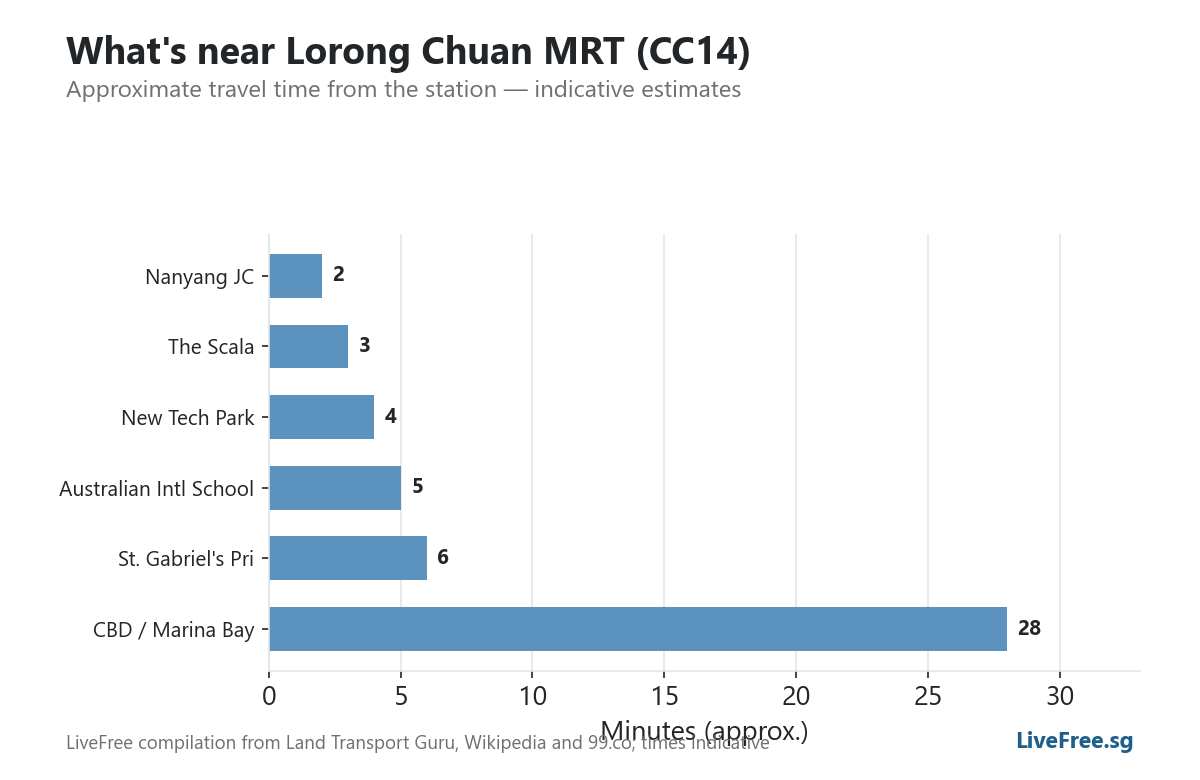
If there is one thing that defines demand for this enclave, it is schools. The immediate area is unusually dense with them, which is a large part of why families and expat tenants gravitate here.
Treat the single-digit walk minutes as about figures rather than stopwatch truth — they are estimated from the station exits. But the clustering is real: few enclaves put a JC, several MOE primaries and secondaries, and an international school within one MRT catchment. If you have a school-going family, the priority-distance implications alone make this area worth a serious look.
A quick word on how this feeds demand. Under Singapore’s Primary 1 registration framework, living within one and two kilometres of a preferred school confers registration priority, so proximity to a popular primary like St. Gabriel’s is a tangible draw that supports rental and resale demand nearby. The international school angle works differently but pulls in the same direction: expat families posted to Singapore often shortlist homes by walkability to their children’s campus, and AIS sitting minutes from the station makes this pocket a natural target for that tenant pool. The net effect is a school-anchored floor under local housing demand — not a guarantee of price growth, but a structural source of interest that thinner enclaves lack. As always, confirm current registration distances and school policies directly with the MOE, as catchment rules can change.
Day-to-day, you are not short of options despite the enclave’s quiet feel. NEX, one of the north-east’s largest malls, is one stop away at Serangoon, covering supermarkets, cinemas, dining and services in one trip. Junction 8 at Bishan is equally close on the other side.
Closer to home, the food scene leans local and beloved. Serangoon Gardens — a short bus or drive away — is home to Chomp Chomp Food Centre, one of Singapore’s best-known supper hawker haunts, and myVillage for groceries and cafés. New Tech Park, a few minutes’ walk via Exit B, doubles as a business park and a handy F&B and services cluster for residents. Add the heartland wet markets and coffeeshops of the surrounding Serangoon estates and you have a neighbourhood that covers both the “quick prata run” and the “big weekly shop” without much friction.
What residents tend to appreciate is the layering of options by distance. Everyday needs — the kopitiam breakfast, the neighbourhood clinic, the provision shop — sit within walking distance. The mid-tier weekend outing, whether that is Chomp Chomp or myVillage, is a short bus ride. And the big-format experience of a regional mall like NEX is a single MRT stop. You rarely have to travel far for the errand at hand, which is a quietly underrated quality-of-life factor that does not show up in a psf figure but shapes how the enclave feels to live in day after day.
Green space is part of the appeal here. Bishan-Ang Mo Kio Park, one of Singapore’s largest urban parks, and the MacRitchie Reservoir nature trails are roughly a 10-minute drive away — that figure comes from marketing copy, so treat it as indicative, but the parks are genuinely close. Bishan-AMK Park is known for its naturalised river, open lawns and playgrounds, and it draws families across the north-east at weekends; MacRitchie, a little further, offers boardwalk trails and the well-loved TreeTop Walk for those who want a proper morning in the forest.
The Serangoon Park Connector links the area into the wider Park Connector Network, so cyclists and runners can string together longer loops without much road time — a genuine plus for anyone who wants to commute by bicycle or simply run without dodging traffic. For a family that wants weekend greenery without living far from an MRT, the balance here is hard to beat: you get the density and convenience of an established town alongside quick access to some of the island’s better-known green lungs.
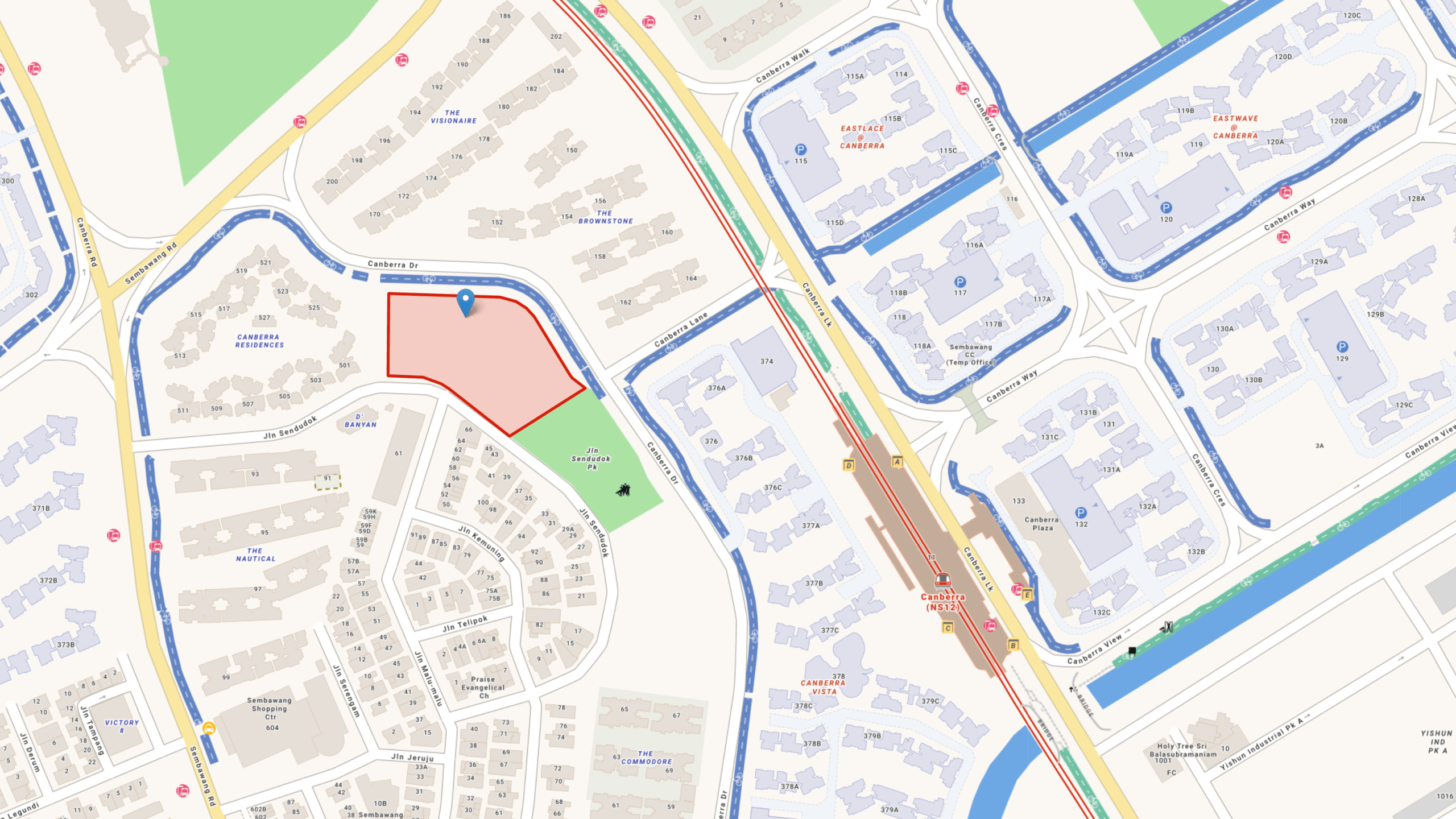
The housing stock around Lorong Chuan is a comfortable mix rather than a wall of new towers. The nearest condo to the station is The Scala (468 units, two 17-storey blocks, 99-year leasehold, 1–4 bedroom units from about 474 to 2,142 sqft), roughly a 1–5 minute walk via Exit A. Around it sit established projects such as Goldenhill Park, The Springbloom, Chiltern Park, Amaranda Garden and The Chuan, interspersed with landed housing toward Serangoon Gardens and pockets of HDB in the broader Serangoon estate.
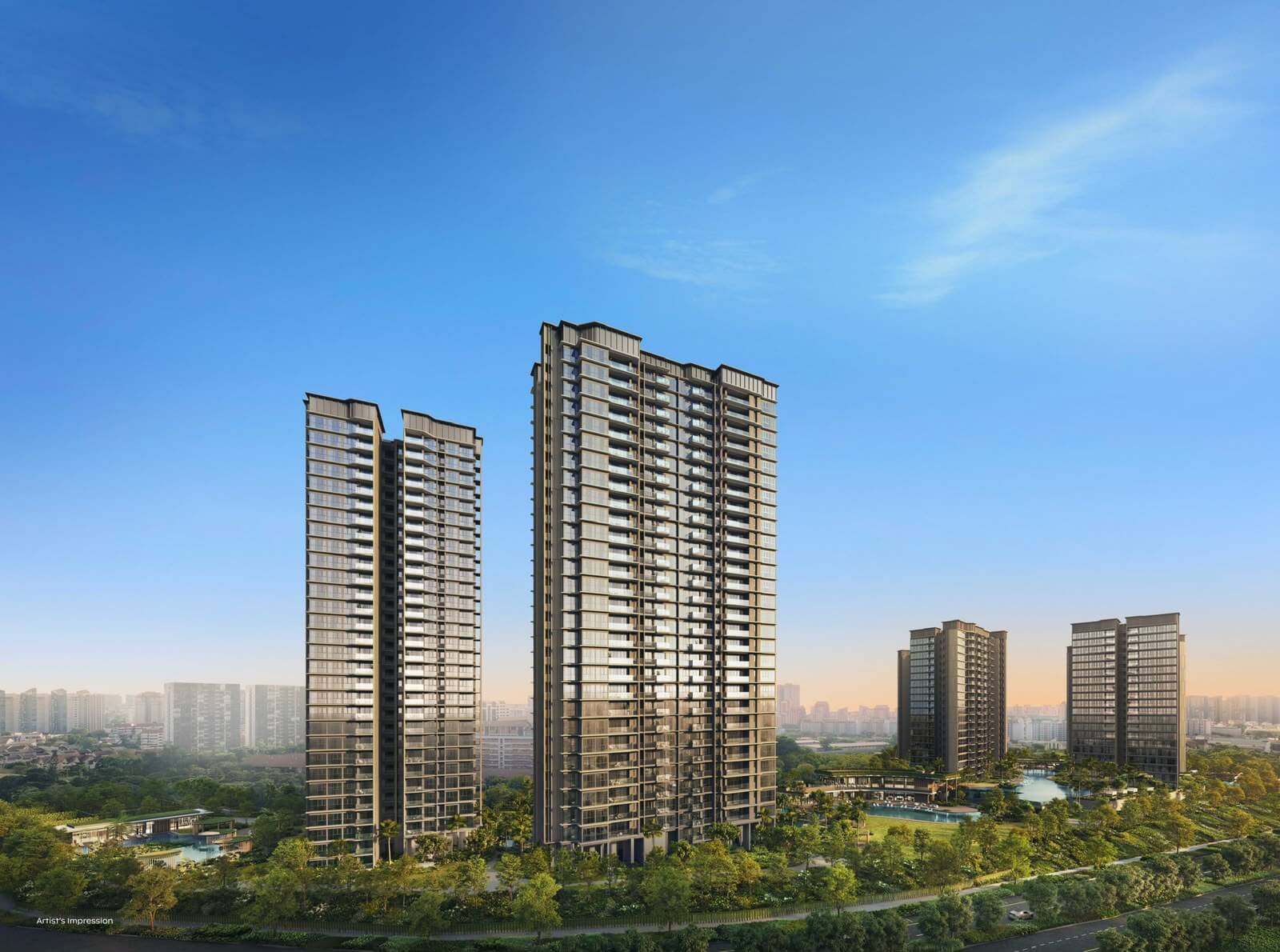
The newest addition to the enclave is One Chuan Grove, the Government Land Sales new launch in the Lorong Chuan pocket — a District 19 site reported at around 1,055 units, developed by Sing Holdings and Sunway, and slated for launch around 3Q2026. These figures are reported and indicative until confirmed against official sources. Importantly, Chuan Grove is a separate project from Chuan Park — the latter is a distinct en-bloc redevelopment of the former Chuan Park estate, with its own developer, site and unit count. They share a name fragment and a neighbourhood, nothing more; do not merge their prices or specs when you compare listings.
The overall character is quiet, mature and family-oriented — tree-lined roads, a school-run rhythm in the mornings, and a low-rise skyline that keeps the enclave feeling residential rather than commercial. This mix matters for buyers: it means resale stock spans a range of ages, sizes and price points, so the enclave rarely lives or dies on a single project. A leasehold condo beside the station, a landed home in Serangoon Gardens and an HDB flat in the wider estate can all be within a ten-minute radius, which keeps the neighbourhood socially mixed rather than monocultural. For anyone weighing a long-term home here, that diversity tends to translate into steadier, more liquid demand than a one-note new-launch precinct.
So who thrives here? A few clear profiles:
Who might it not suit? If you want nightlife on your doorstep, a brand-new integrated precinct, or a purely investment play chasing the highest headline yield, other parts of the island may fit better. Lorong Chuan rewards buyers who value liveability, schools and connectivity over buzz — a trade that many families are happy to make, but one worth being honest with yourself about before committing.
If your decision hinges on whether to buy new or resale in this district, our breakdown of District 19 new launch vs resale prices walks through the trade-offs with current indicative psf ranges, and pairs naturally with this guide. Whichever way you lean, the enclave’s fundamentals — the Circle Line link, the schools and the quiet residential character — are the constants worth anchoring your decision on.
Which district is Lorong Chuan in?
Lorong Chuan sits in postal sector 55, which maps to District 19 (the Serangoon / Serangoon Gardens / Hougang grouping). Note that Bishan and Ang Mo Kio, one stop away, are District 20 — so the two should not be conflated. These district mappings come from property and education directories rather than a single URA gazette, but they agree.
Which MRT line is Lorong Chuan on?
It is CC14 on the Circle Line (CCL), an underground station that opened on 28 May 2009. It is one stop from Serangoon (Circle Line / North East Line interchange) and one stop from Bishan (Circle Line / North-South Line interchange).
Is Lorong Chuan a good place to live?
For families, upgraders and school-focused buyers, it is a strong fit: a dense cluster of schools, quiet leafy streets, parks nearby and two MRT interchanges one stop away. It trades big-precinct buzz for a mature, residential feel. Whether it suits you depends on your budget and lifestyle priorities.
How far is Lorong Chuan from town?
Roughly 25–30 minutes to the CBD or Marina Bay, either riding the Circle Line round or changing to the North East Line at Serangoon. Treat that as an estimate rather than a fixed timetable figure.
What schools are near Lorong Chuan MRT?
St. Gabriel’s Primary and Secondary, Nanyang Junior College, Zhonghua Secondary, Yangzheng Primary and the Australian International School are all in the immediate catchment, most within a short walk of the station exits.
What condos are near Lorong Chuan MRT?
The Scala is the nearest, alongside established projects such as Goldenhill Park, The Springbloom, Chiltern Park, Amaranda Garden and The Chuan. The newest is Chuan Grove, an upcoming GLS launch — a separate project from The Chuan Park.
Is Chuan Grove the same as The Chuan Park?
No. Chuan Grove is a Government Land Sales new launch in the Lorong Chuan enclave. The Chuan Park is a separate en-bloc redevelopment with a different developer and site. They should never be treated as the same project.
Disclaimer: Figures in this guide — walk and ride times, unit counts, launch dates and district mappings — are indicative and drawn from public sources that may change. This is general information, not financial or property advice. Always verify against official URA, LTA and developer sources, and consult a CEA-registered agent before making any decision.
Hi 
We offer private property consultations for readers. Interested?