

Serangoon is the most expensive address in the north east, and buyers rarely ask what they are paying for. The answer is specific: an interchange between two lines, the largest mall outside the city in this half of the island, and a school belt that families will move house for. A Serangoon condo costs more than Hougang, Kovan or Bartley because of those three things and essentially nothing else.
This guide sets out what the Serangoon condo premium buys, when it is worth paying, and when one stop further out is the better decision.
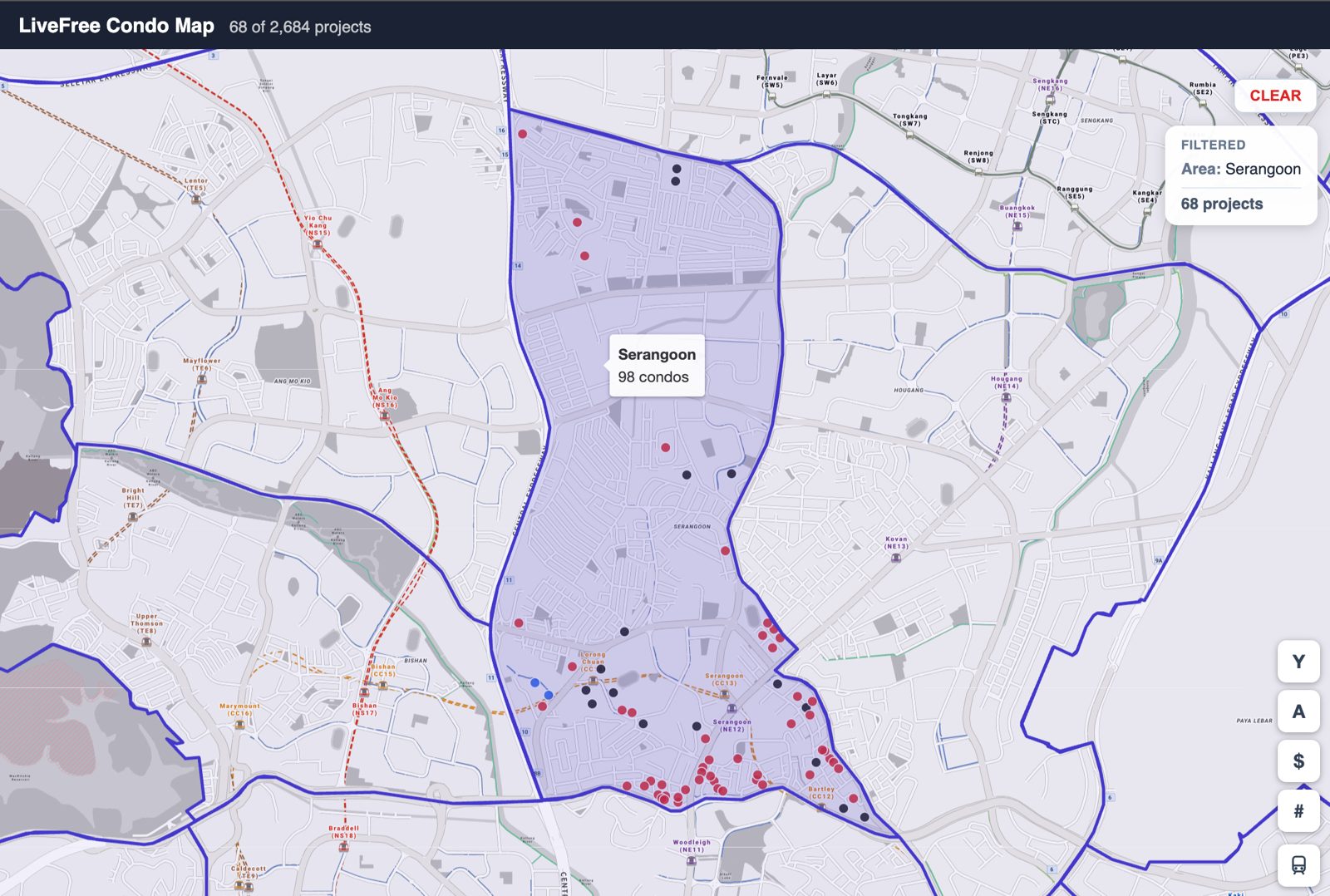
Start with the count. The Serangoon planning area holds 68 private projects, from the interchange out to the landed fringes.
The private stock is a mix of mature mid-2000s developments and a handful of newer projects, wrapped around the interchange and spreading toward Upper Serangoon and Lorong Chuan.
The benchmarks worth knowing are Affinity at Serangoon, Forest Woods, The Garden Residences, The Gazania and Terrasse.
Note what is absent from that list. There is no waterfront, no landed prestige and no employment cluster. A Serangoon condo is priced on convenience, which is the most durable of the suburban premiums because it does not depend on a future project being delivered.
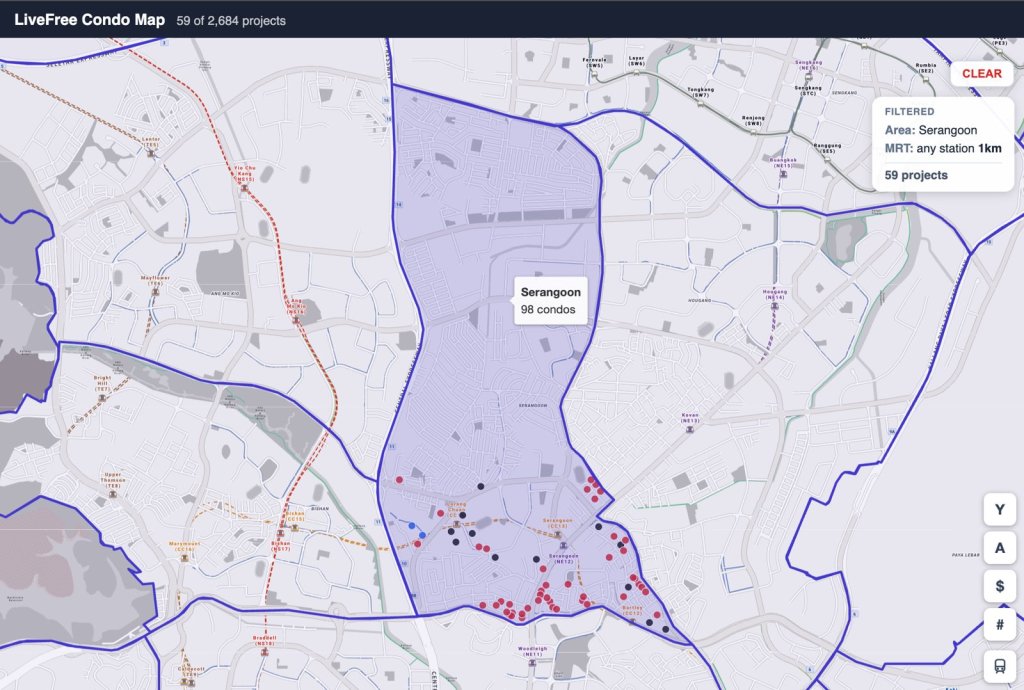
The map shows the premium’s foundation. 59 of Serangoon’s 68 projects sit within one kilometre of a station. Almost the whole market is on the rail map, and you pay for that.
Three things, in order of how much they matter to resale.
What the premium does not buy is space. A Serangoon condo consistently delivers less floor area per dollar than Hougang or Kovan, and that gap is the trade you are accepting.
We compared the two sides of that directly in Serangoon versus Lorong Chuan, and the district-wide layout picture is in District 19 condos with the best family layouts.

It is the wrong call for a space-first buyer. If your priority is a genuine four-bedroom unit, the same budget goes considerably further one or two stops out, and the daily difference is a few minutes.
The upgrader sequencing is the same everywhere and is covered in the HDB upgrading roadmap and the District 19 upgrading checklist.
A Serangoon condo also carries the deepest buyer pool in the north east, and that is worth naming separately from price. Liquidity is invisible while you own and decisive when you sell.
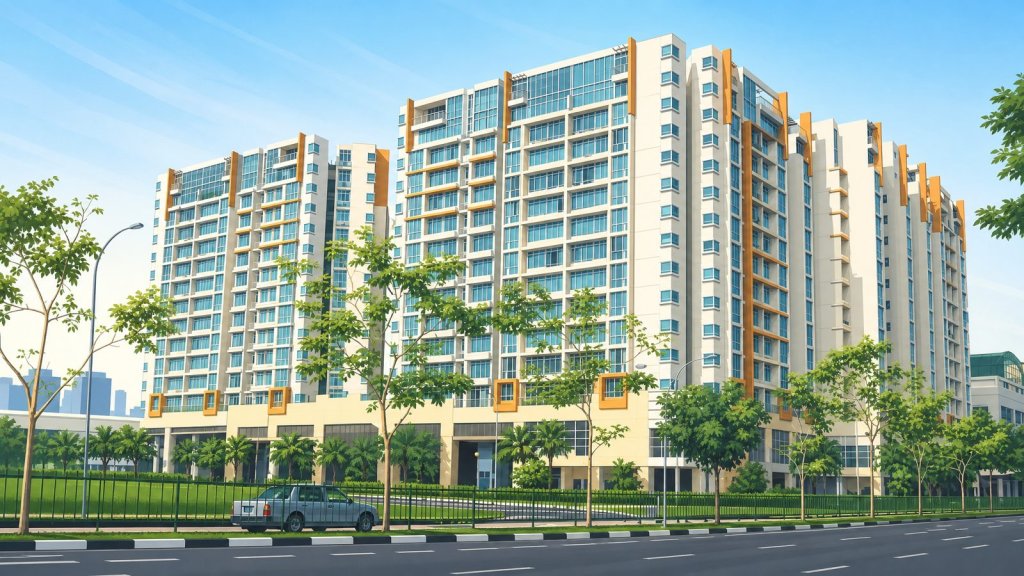
This is the argument we make most often, and it is not contrarian. A Serangoon condo and a Kovan or Bartley one sit minutes apart on the same lines. The premium buys amenity density, not travel time.
The Cross Island Line changes that calculus further, as we set out in our Cross Island Line analysis.
Transacted evidence by project is published by URA, and the ballot data that actually decides school outcomes is covered in our District 19 schools guide and the Primary 1 registration guide.
If you use the schools, the interchange or NEX regularly, yes. If you mainly want space, the same budget goes further one stop out. Our district performance analysis puts the numbers in context.
Serangoon for amenity, liquidity and schools. Hougang for space and a lower entry price with a Cross Island Line upgrade coming. Both sit on the North East Line minutes apart, so the decision is about what you want at your doorstep.
The belt is genuinely strong, which is why demand holds. But proximity is measured on a strict one-kilometre radius, so a development on the wrong side of a road can miss entirely. Check the ballot history before you assume.
Occupancy is the best in the north east because of the interchange, but the higher entry price means headline yield is unremarkable. The full net calculation is in our rental yield guide.Planning your own move? Contact Kelvin on WhatsApp — a question costs nothing.
Hi 
We offer private property consultations for readers. Interested?