

Hudson Place Residences is the most polarising launch in District 5, and the reason has little to do with the project. One-north is no longer emerging, but it does not yet feel mature, and buyers read that transition in opposite directions.
Hudson Place Residences sits in a district that resists easy description. Some districts are easy to understand. Bishan is a family town, Katong is lifestyle-driven, Orchard is luxury, Jurong is a long-term transformation. One-north has always been harder to define.
Look at the project and one group turns immediately bullish: high-income jobs, strong rental demand, MRT connectivity, proximity to town, one of Singapore’s most important innovation ecosystems. Another group looks at the same district and hesitates, because despite the growth it still does not feel like a traditional Singapore residential town.
Depending on how you read that transition, Hudson Place Residences is either early positioning or a district that still needs patience. Both readings are fair, which is why this piece sets out each case honestly rather than picking one. Our ten-year district study provides the historical frame.
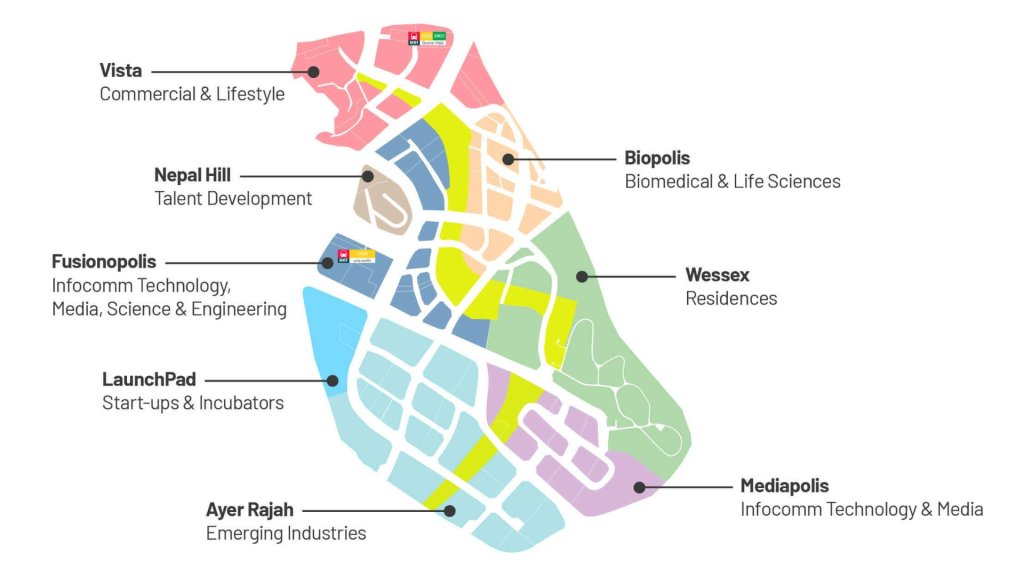
Most Singapore launches come with a clear surrounding ecosystem: HDB clusters, coffee shops downstairs, wet markets, schools, neighbourhood malls. The future buyer is obvious, usually an HDB upgrader working through the sequence in our upgrading roadmap.
One-north was planned around innovation, research, technology and business rather than residential living. The atmosphere is more international than suburban, and the surrounding workforce skews toward tech professionals, researchers, startup founders, expatriates, multinational talent and postgraduate students.
For some buyers that is exactly the appeal: a future-forward district with a tenant ecosystem difficult to replicate elsewhere, strong MRT connectivity, a greener and less dense feel than most city-fringe districts, and reasonable proximity to Orchard and the CBD.
For others the district still lacks warmth. It can feel quiet after office hours, parts still read as business park rather than neighbourhood, and there are fewer everyday Singapore touchpoints. Buyers here are not simply evaluating a condo. They are evaluating whether one-north can mature into a complete residential destination.
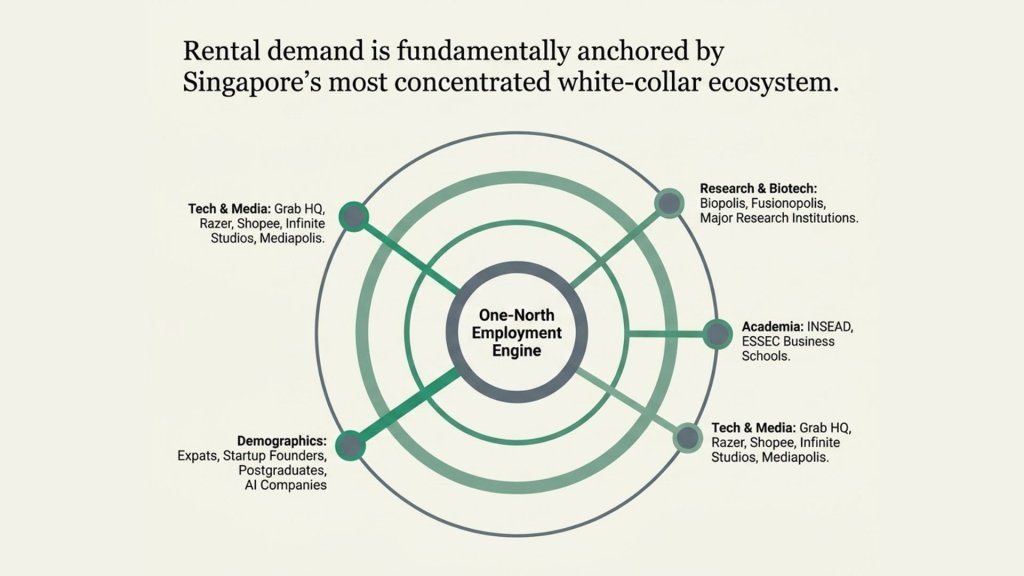
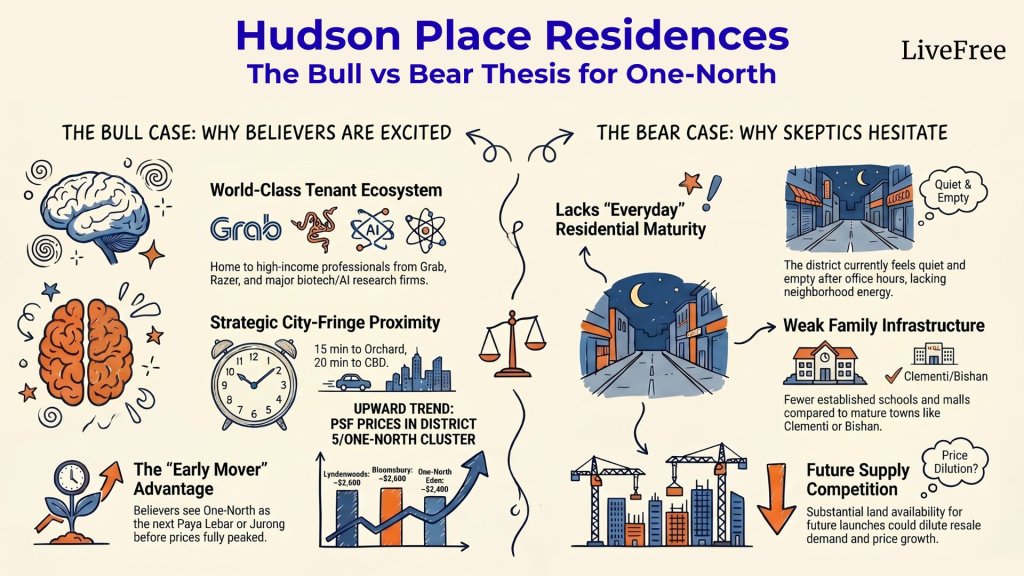
The bullish argument for Hudson Place Residences starts with one fact: one-north has among the strongest employment ecosystems in Singapore. Within the district sit Biopolis, Fusionopolis, Mediapolis, Grab HQ, Razer, Shopee, Infinite Studios, INSEAD, ESSEC and multiple biomedical and technology firms. Unlike older business parks, it is still actively expanding.
Long-term property demand usually follows employment growth, and there are few places in Singapore where people genuinely want to live near work as much as here. Rental demand has stayed relatively resilient as a result, drawing high-income foreign professionals, founders, researchers, postgraduates and multinational staff working inside the district. For investors that is the strongest part of the story, because the tenant pool already exists today. Realistic numbers sit in our rental yield guide.
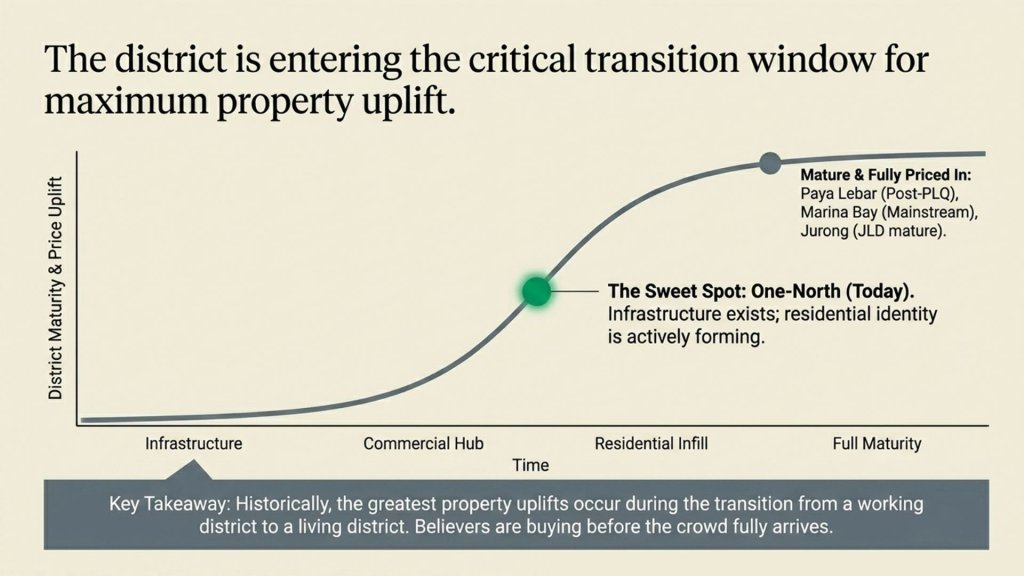
The second bull argument is timing. Supporters compare one-north today to Paya Lebar before PLQ, Jurong before JLD matured, or Marina Bay before it became mainstream residentially. The jobs and infrastructure are already in place; the residential identity is still forming. Some of Singapore’s strongest long-term stories happened in exactly that transition phase, because once a district is fully accepted, prices already reflect it.
There is a quieter advantage too. Against many newer OCR mega-developments, one-north feels less crowded and more curated. The environment is greener, the roads wider, the density lower. For buyers wanting city-fringe convenience without congestion, that combination is increasingly hard to find.
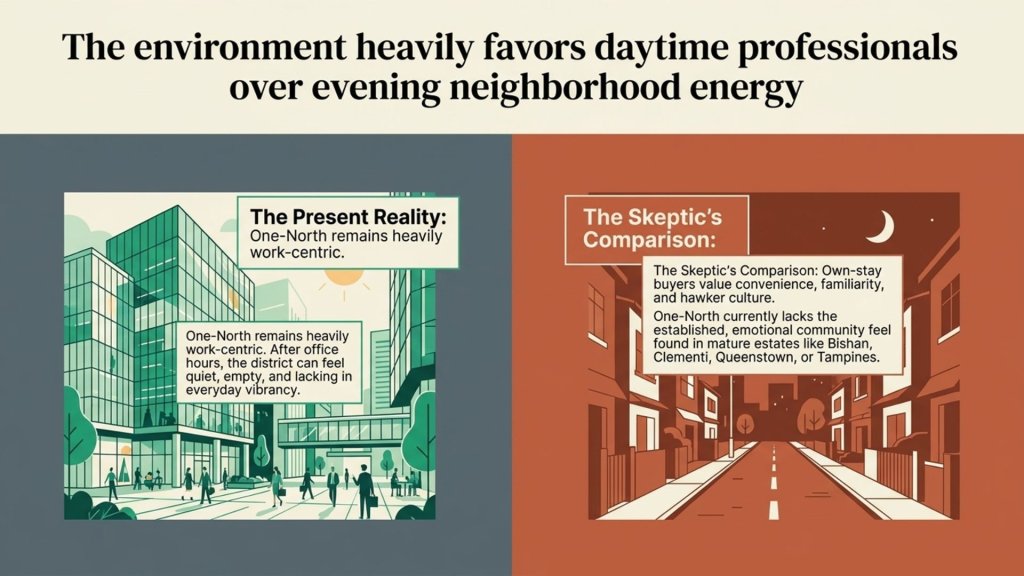
The sceptics on Hudson Place Residences have valid concerns, and some are difficult to dismiss. The core issue is that one-north still does not feel like a complete residential town. After office hours parts of it stay quiet and work-centric. Against Bishan, Clementi, Queenstown or Tampines, it lacks the familiar everyday-neighbourhood feeling.
That matters emotionally. A home is not only about future upside. People care about community feel, familiarity, schools, hawker culture, family infrastructure and comfort. The gap widens for own-stay family buyers, because one-north performs best as a professional and investor district.
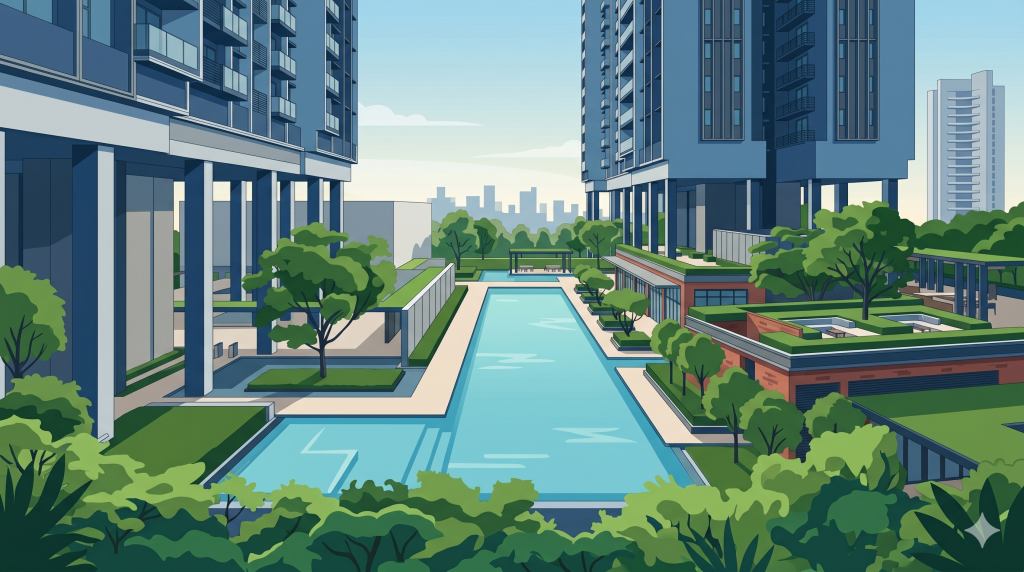
Mature estates already have strong school ecosystems, larger malls, more childcare options, deeper HDB upgrader demand and decades of suburban infrastructure. Those took a long time to build, and sceptics question whether one-north can realistically replicate that residential depth.
There is a second concern: future supply. One-north still has substantial land available. Transformation sounds exciting, but future plots also mean more launches, more competition and more resale alternatives later. Nearby The Hill @ one-north, Bloomsbury Residences and Lyndenwoods already fill part of that shelf. Will demand keep growing faster than supply? Believers say yes. Sceptics are not convinced, and that uncertainty is what makes Hudson Place Residences a conviction-based purchase.
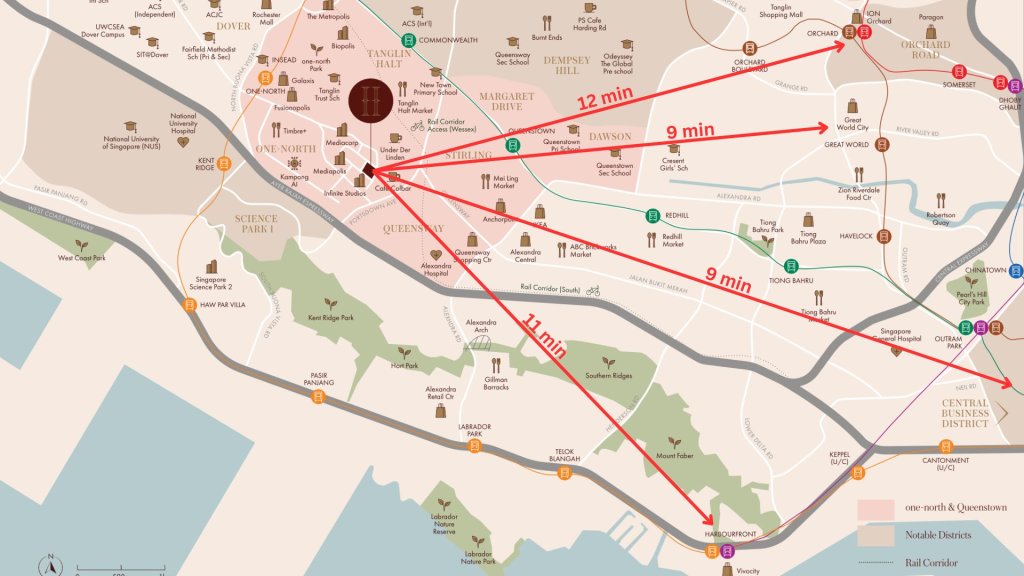
A common misconception about Hudson Place Residences is that one-north feels remote. Geographically it is very central. Buona Vista MRT interchange connects to both the East-West and Circle Lines, and drive times to Orchard and the CBD are more reasonable than most people assume.
The district also sits close to Holland Village, Dempsey, Rochester Mall, Star Vista, Science Park, Alexandra, Mapletree Business City and the wider southern employment corridor. For professionals working in one-north itself, the CBD, Science Park, Harbourfront or Mapletree Business City, the location is genuinely practical.
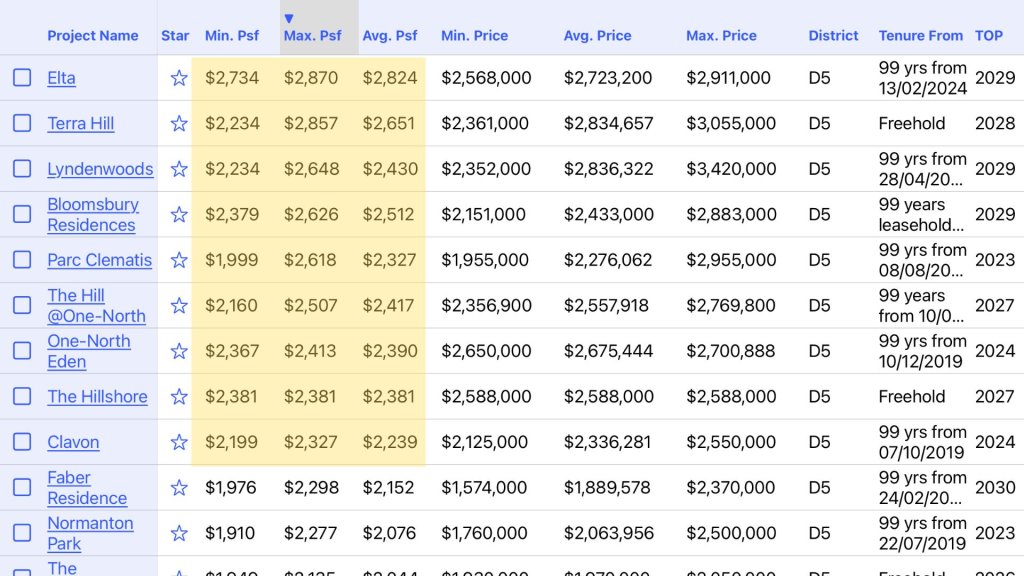
That is why expatriates and professionals are increasingly comfortable renting here. It offers a balance uncommon in Singapore: close enough to the city, less dense and less chaotic than most city-fringe districts. On price, the District 5 comparables above are the honest benchmark, and project scale matters as much as address, as our boutique condo analysis shows.
Both sides of this argument are reasonable. That is unusual, and it is the most honest thing anyone can say about the project. Compare it against the wider field in our 2026 shortlist and the 2025 market backdrop.
Hudson Place Residences sits in the one-north district of District 5, close to Buona Vista MRT interchange, which serves both the East-West and Circle Lines.
It depends what you want. It is strong on employment access, rental demand, greenery and lower density. It is weaker on the everyday neighbourhood infrastructure that mature estates already have.
That is the strongest part of the Hudson Place Residences case. The tenant pool already exists, drawn from Biopolis, Fusionopolis, Mediapolis, Grab, Razer, Shopee, INSEAD and ESSEC, rather than depending on a district that still has to form.
Future supply. The land around Hudson Place Residences is not fully committed, which means more launches and more resale competition later. Whether demand outpaces that is the open question.
More cautiously. One-north performs best for professionals and investors. Families comparing it against Bishan, Clementi or Queenstown will find a real ecosystem gap on schools, malls and childcare.
Trying to decide which side of the one-north argument you are on? Contact Kelvin on WhatsApp — a question costs nothing.
Future supply is the honest risk. Substantial land remains, which means more launches and more resale competition later.
Hi 
We offer private property consultations for readers. Interested?