

A Sengkang condo is the cheapest way to own private property with a direct MRT line to the CBD. That single sentence explains most of the demand here. Sengkang is newer than Hougang, younger than Serangoon, and priced below both, and the households buying here are usually doing the same calculation: how much private space can we get without giving up the commute.
This guide covers what the Sengkang condo market contains, the trade-offs nobody mentions at the showflat, and how it compares with Punggol next door.
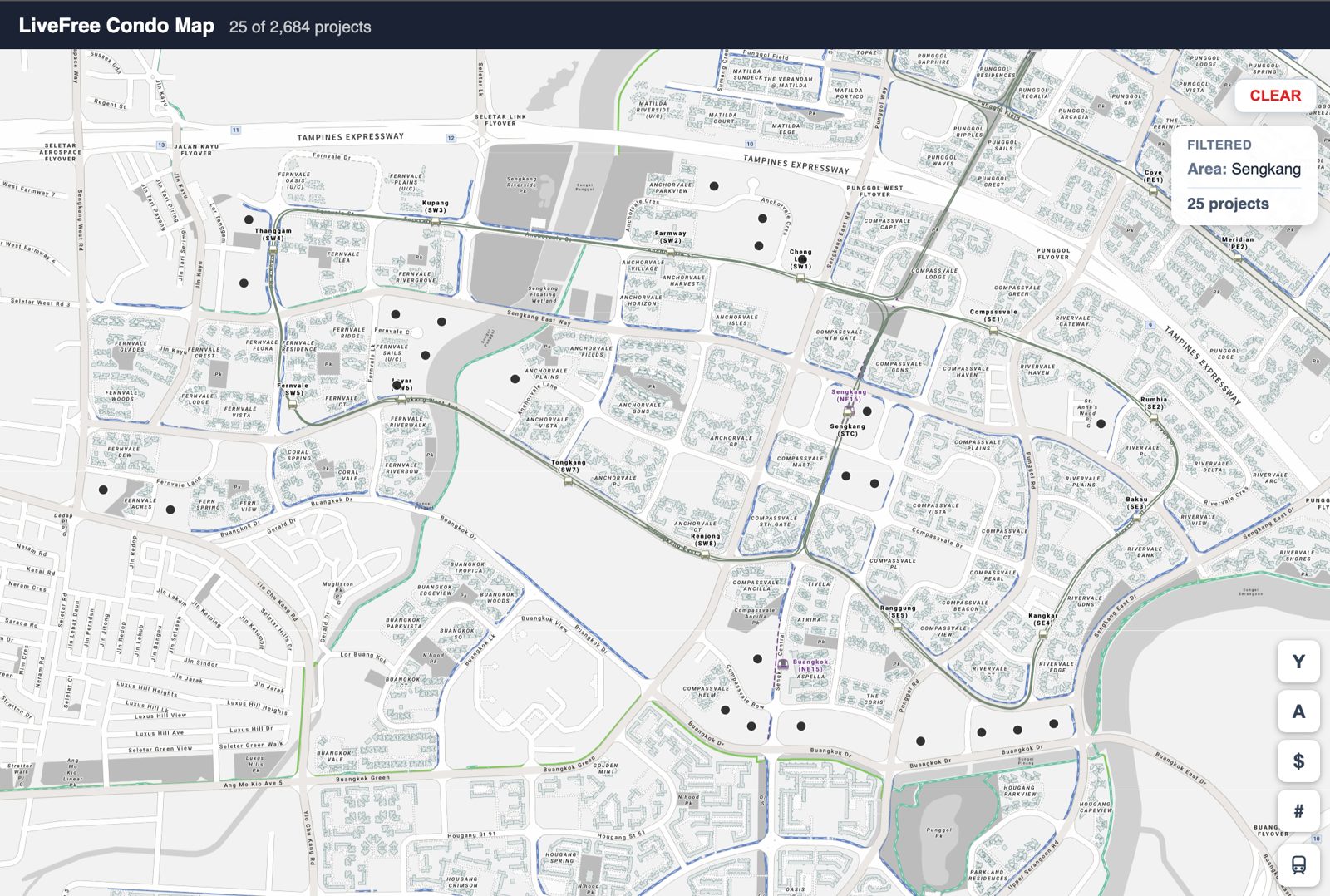
Start with the count. The whole Sengkang planning area holds just 25 private projects. That is the entire market.
Sengkang is a planned town, and its private stock reflects that. Developments are larger, newer and more uniform than in the mature estates further down the line, and they cluster around the LRT loops rather than the MRT station itself.
The stock worth benchmarking against includes Sengkang Grand Residences above the interchange, Compass Heights, The Luxurie, La Fiesta and Riversound Residence.
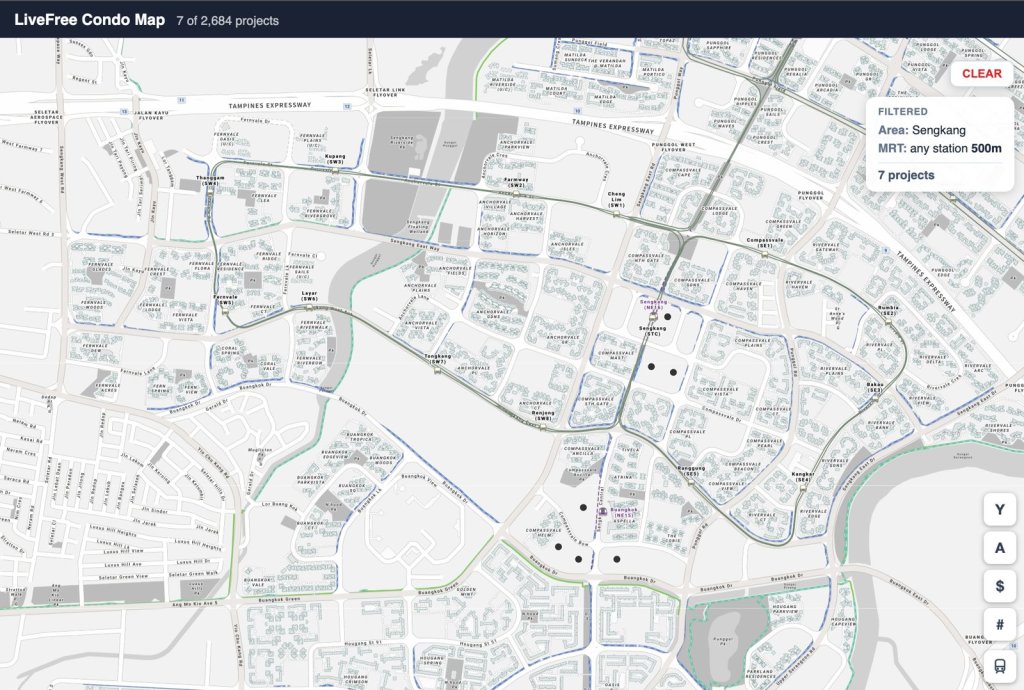
The map settles this section’s argument. Only 7 of the 25 projects sit within 500 metres of a full MRT station. Everything else leans on the LRT, and the market prices that lean.
This is the part that separates a good Sengkang condo from an ordinary one, and it is barely discussed. A unit within walking distance of Sengkang MRT behaves like a mature-estate property. A unit that requires an LRT ride first behaves like a suburban one, and prices accordingly.
Before you commit to a Sengkang condo, do the actual commute at 8am on a weekday. Not the drive, and not the map estimate. The difference between the two categories is worth more than any facility deck.
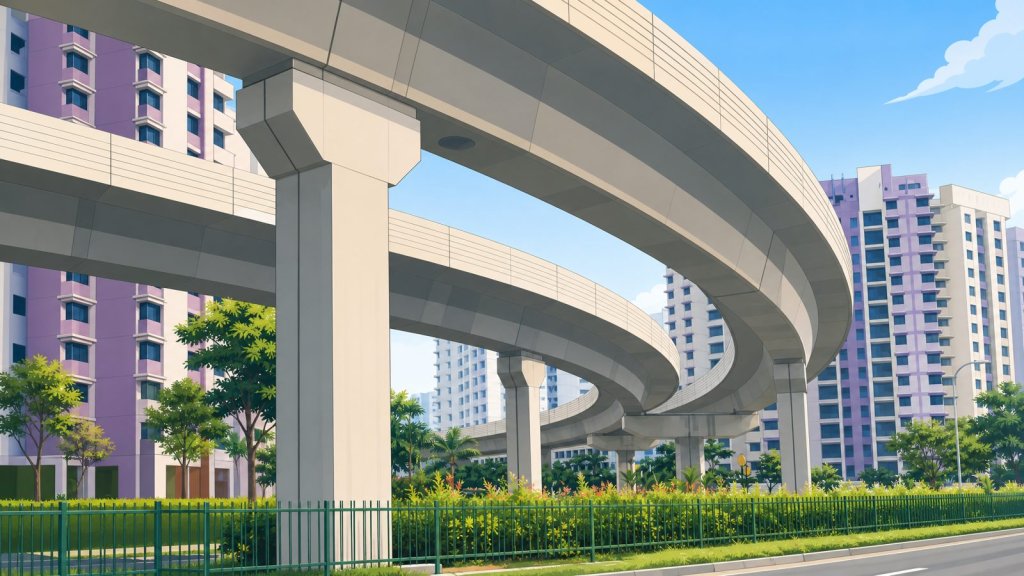
There is a second-order effect worth naming. Because so much of the Sengkang condo stock sits on the LRT loops, the walkable units are genuinely scarce even though the town as a whole has plenty of supply. Scarcity inside an oversupplied town is an unusual combination, and it is why the premium for those stacks has held up better than the district average.
It suits investors chasing yield less well. Tenant demand here is thinner than in Serangoon or Hougang because there is less employment nearby, and the net numbers after maintenance and tax are set out in our rental yield guide. The upgrading sequence itself is in the HDB upgrading roadmap.
The supply point is the one to take seriously. When several Sengkang condo projects reach their five-year mark together, sellers compete on the same floor plans in the same postcode, and that is when a well-chosen stack matters far more than the development’s brand.
The wider pipeline sits in the 2H 2026 GLS sites and the 2026 land bids. Transaction evidence by project is published by URA.
One practical habit: pull the last two years of transactions for the specific development, not the town. Town-level averages in Sengkang blend walkable and LRT-dependent stock, which makes the average meaningless for the unit you are actually buying.
They are frequently treated as one market and they are not. Sengkang is more central on the line, has more mature amenity and a slightly older private stock. Punggol has the waterfront, the newer housing and the Digital District employment story that Sengkang does not.
In practice, buyers who commute to town lean Sengkang, and buyers who want the waterfront lifestyle or work in the north east lean Punggol. Neither is wrong. What matters is that a Sengkang condo priced as though it were Punggol waterfront, or the reverse, is the mistake to avoid.
For an owner-occupier who needs space and uses the NEL, yes, provided you buy a well-located stack rather than the cheapest unit. Compare it against other suburban options with our district performance analysis.
Sengkang for the shorter commute and more mature amenity, Punggol for the waterfront and the Digital District employment story. Both sit on the same line, so the deciding factor is usually where you work and whether you want water or town centre at your door.
Consistently. Units within walking distance of the MRT interchange hold a premium and resell faster, because every subsequent buyer runs the same commute test you should be running now.
Occupancy is reasonable but yields are ordinary, because local employment is limited and the tenant pool is smaller than in Serangoon or Hougang. The full net calculation is in our rental yield guide.
Planning your own move? Contact Kelvin on WhatsApp — a question costs nothing.
Hi 
We offer private property consultations for readers. Interested?